



Back in September 2018, when Apple launched the iPhone XS with stunning specifications, it was not a slight update of the iPhone X. This masterpiece make waves in the smartphone industry being an upgrade of the previous models in terms of sophistication, performance, and camera capabilities. From a stronger body and quicker chip to a dual-lens camera and brighter OLED display, this model retained the refinement of the iPhone X while improving nearly every aspect.
In this comprehensive iPhone XS review, we will explore the design, display, features, performance, and overall user experience. If you want to evaluate a refurbished unit or if you only want to know Apple’s evolution, this article covers every detail, including iPhone XS specifications, versions, and key performance benchmarks. So, you can make a perfect buying decision if the model meets your expectations. Read till end to know iconic Apple iPhone XS specifications and features.
1: iPhone XS Versions and Model Numbers
Just like other flagship Apple devices, the iPhone XS came in multiple variants tailored to different regions. Here is how they are categorized:
1.1: A2097
Region: Global market
1.2: A1920
Region: USA, Canada, Puerto Rico, U.S. Virgin Islands
1.3: A2100
Region: China, Hong Kong
1.4: A2098
Region: Japan
Except for the differences in regions, all models possess an identical design and even similar features, and internal hardware. The only difference is in network compatibility (SIM configurations and LTE bands).
The iPhone XS uses GSM / CDMA / HSPA / EVDO / LTE, providing global roaming ability that makes it a perfect feature for international users.
2: iPhone XS Design and Build Quality
Apple’s iPhone XS design also perfected the glass-and-steel look unveiled by the iPhone X. It uses Corning-produced front and rear glass panels held together by a stainless-steel frame, which provides both beauty and durability.
- Dimensions: 143.6 x 70.9 x 7.7 mm
- Weight: 177 g
- Build: Glass front/back + stainless-steel frame
- Water resistance: IP68 (up to 2m for 30 minutes)
The IP68 rating is an improvement from the iPhone X’s IP67, making the XS more durable against unintentional splashes or temporary submersion.
Color options sich as Space Gray, Silver, and Gold provide users with an old-school yet premium color scheme. The gold option was especially complimented for being elegantly warm to light.
In hand, the iPhone XS feels sturdy but diminutive, simpler to handle than the bigger iPhone XS Max, but no less charming in terms of design. The edges are rounded, buttons are tactile, and overall ergonomics are top-notch.
3: iPhone XS Display and Visual Experience
Apple called the XS display Super Retina OLED, and rightly so, it provides exquisite visuals.
The screen is among the top in class, with bright colors, rich blacks, and crisp text. HDR10 and Dolby Vision support make video playback better, particularly for streaming movies on Apple TV+ or Netflix.
Apple’s True Tone technology adapts color temperature to ambient lighting, making viewing comfortable across environments, a small but effective feature for daily usage.
Notably, the iPhone XS display outperforms many mid-range OLEDs even today, maintaining excellent visibility under direct sunlight and superb accuracy for photo editing and media viewing. The aforementioned features make it a perfect choice for content creators.
- Type: Super Retina OLED, HDR10, Dolby Vision
- Size: 5.8 inches
- Resolution: 1125 × 2436 pixels, ~458 ppi density
- Brightness: 625 nits (HBM)
- Contrast Ratio: Infinite (nominal), 5.171:1 (sunlight)
- Protection: Scratch-resistant glass
- Features: True Tone, 3D Touch, Wide color gamut
This small yet immersive screen made the XS one of Apple’s most well-rounded phones. They are just perfect for single-hand operation yet still offering cinematic-quality visuals.
4: iPhone XS Features Overview
Aside from performance, the iPhone XS specifications boast a great mix of intelligent upgrades that prioritize convenience, security, and daily use.
- Face ID: Improved facial recognition for quicker unlocks
- Dual SIM support: Nano-SIM + eSIM or Dual Nano-SIM (Chinese models)
- Apple Pay: Visa, MasterCard, AMEX certified
- Water and dust resistance: IP68 rating
- Stereo speakers: Louder and crisper sound with more bass
- Animoji and Memoji: Driven by the TrueDepth camera
The XS is a complete Apple experience, highly secure, seamless, and well-integrated with the iOS ecosystem. Let us have a look at Apple iPhone XS specifications and features in detail.
Is iPhone X better than iPhone XS? Find out here
4.1: iPhone XS Specifications
| Category | Specification |
| Network | Backs GSM, CDMA, HSPA, EVDO, and LTE technology support for broad global compatibility. |
| Launch | Launched on September 12, 2018, and available from September 21, 2018 |
| Body | Measurements: 143.6 × 70.9 × 7.7 mm · Weight: 177 g · Has a Corning glass front and rear and stainless-steel frame. |
| SIM | Has a Nano-SIM and eSIM configuration, with Dual SIM on Chinese models. |
| Display | 5.8-inch Super Retina OLED display supporting HDR10, Dolby Vision, and brightness of up to 625 nits (HBM) with 1125×2436-pixel resolution (~458 ppi density). Integrated with scratch-resistant glass and 3D Touch functionality. |
| Platform | Comes pre-installed with iOS 12, upgradable to the current iOS 18.7 version. |
| Chipset | Based on the Apple A12 Bionic (7 nm) processor. |
| CPU | Hexa-core configuration, 2×2.5 GHz Vortex (for high-performance) and 4×1.6 GHz Tempest (for efficiency) cores. |
| GPU | Apple-designed 4-core GPU for improved gaming performance and graphic rendering. |
| Memory | Coming in 64GB, 256GB, and 512GB NVMe storage options, alongside 4GB of RAM. |
| Main Camera | Dual 12MP camera setup: wide + telephoto, with OIS, PDAF, and 2× optical zoom. Records 4K (24/30/60fps) and 1080p (30/60/120/240fps) with HDR and stereo sound recording support. |
| Selfie Camera | 7MP front-facing camera (f/2.2) with an SL 3D depth sensor, HDR, and 1080p video at 30/60fps. |
| Sound | Boasts stereo speakers with no 3.5mm headphone jack. |
| Connectivity | Wi-Fi (a/b/g/n/ac), Bluetooth 5.0, GPS, GLONASS, GALILEO, QZSS, NFC, and Lightning USB 2.0 port. |
| Sensors | Face ID, accelerometer, gyro, proximity, compass, and barometer. |
| Battery | Li-Ion 2658 mAh (10.13 Wh) with 15W fast charging (PD 2.0)—charging up to 50% in 30 minutes; also supports Qi wireless charging. |
| Talk Time | Up to 27 hours |
| Colours | Comes in Space Gray, Silver, and Gold colors. |
| SAR | 1.19 W/kg (head) and 1.18 W/kg (body). |
| Performance Scores | AnTuTu: 346,379 · GeekBench: 11,472 · GFXBench: 47 fps. |
| Battery Endurance | 72-78 hours |
| Price (approx) | Approximately €190 for used units (dependent on condition and market). |
(video link)
5: iPhone XS Performance and Hardware Power
As far as performance goes, the iPhone XS introduced new benchmarks for speed and efficiency when it was released. With Apple’s A12 Bionic chip based on a 7nm process, the phone offers a seamless, lag-free experience for apps, gaming, and multitasking. With this hexa-core processor, featuring two high-performance “Vortex” cores and four power-efficient “Tempest” cores, the performance meets the perfect balance of power and battery optimization.
In benchmarking tests, iPhone XS performance is still exceptional years after initial release. It had a score of approximately 346,000 in AnTuTu (v7) and reached 11,472 using GeekBench 4.4, reflecting superior graphics and computing prowess. The four-core Apple GPU boosts gaming quality and video rendering, making it a delight for gamers and content creators.
Even by modern standards, the iPhone XS continues to hold its own against many mid-tier flagships, cementing its legacy as one of the most powerful devices of its generation.
In actual use, the iPhone XS performance is still silky smooth, apps open in an instant, games play without frame drops, and multitasking feels seamless.
Apple’s software optimization enables the iPhone XS to provide smooth transition and lag-free performance, even when loaded with more demanding tasks such as 4K video editing or gaming.
4 GB RAM, combined with NVMe storage, provides quick read/write speeds, enabling apps to pick up instantaneously from running in the background. Even after a couple of iOS updates, the XS still manages on iOS 18.7, proof of Apple’s dedication to sustaining performance.
6: iPhone XS Battery Life and Charging
Though the iPhone XS battery life was not exactly groundbreaking on paper, Apple’s optimizations to efficiency made a big difference in actual use. The 2,658 mAh Li-Ion battery may be small compared to Android competitors, but through the A12 Bionic chip and iOS resource management, it performs remarkably well even in 2025.
On full charge, the iPhone XS handles up to 14 hours of video playback with ease, approximately 12 hours of browsing on the web, and almost 21 hours of 3G talk time.
Qi wireless charging and 15W wired fast charging contribute to convenience, reaching 50% in 30 minutes with Apple’s PD 2.0 charger. While not as quick as contemporary USB-C charging rates, it was respectable for its time.
From day-to-day usage to gaming and photography, the 72-hour battery life rating speaks volumes about balanced performance in the hands of normal users. Power social networkers or serious gamers might require an evening refilling, but standby power is robust.
Apple’s emphasis on optimizing battery health lifespan further means that the iPhone XS battery will degrade more gradually than previous lithium technology, so refurbished phones still retain 85–90% capacity after years of service.
7: iPhone XS Camera Review
Apple did more than incremental upgrades with the iPhone XS camera. It provided smart improvements that made photography seamless and cinematic.

The dual 12 MP back setup consists of:
- A wide-angle lens (f/1.8, 26mm) for day-to-day shots.
- A telephoto lens (f/2.4, 52mm) for 2x optical zoom and portrait mode depth effects.
7.1: Important Camera Features:
- Dual OIS (Optical Image Stabilization)
- Dual-pixel PDAF
- Quad-LED True Tone flash
- Smart HDR for enhanced dynamic range
- 4K video at 60 fps and 1080p slow-mo at 240 fps
Apple’s Smart HDR technology was the true showstopper, combining several exposures to create gorgeously balanced highlights and shadows. The iPhone XS images retain detail even in the case of backlit or low-light scenes, minimizing noise without overprocessing.
Video recording is also impressive. Stereo sound recording and high dynamic range video recording make clips feel natural and smooth. The XS was a go-to model for vloggers between 2018–2020 because it was very stable, showed consistent color reproduction, and was easy to export to editing platforms.
The 7 MP TrueDepth camera on the front is not merely for selfies, it drives Face ID, Animoji, and adjustable-bokeh portrait selfies. The sensor is also precise in low-light environments and records realistic skin tones without over-smoothing.
Landscape and cinematic recording, or even just snapshots, the camera of the iPhone XS is still very much on par with budget flagships of today.
8: iPhone XS Display and Multimedia Experience
If streaming, gaming, or viewing bright visuals is your thing, the iPhone XS screen is still one of Apple’s finest small displays. The Super Retina OLED screen is HDR10 and Dolby Vision compliant, delivering tremendous color depth to contemporary content.
The 5.8-inch display finds balance between portability and immersion, with a 19.5:9 aspect ratio perfect for movies and browsing social feeds. Text is blade-sharp due to the 458 ppi density, while blacks are rich enough to compete with flagship OLEDs even in 2025.
With stereo speakers, the multimedia experience is dynamic and immersive. Stereo speakers provide loud and clear sound with well-balanced highs and deep mid-tones, perfect for watching YouTube, Netflix, or playing games without headphones.
Apple’s True Tone and wide color gamut provide accurate color for professionals who photo-edit or content-design. Dolby Vision compatibility heightens supported movies and TV shows, making realistic lighting and textures come alive.
Even after years of upgrades, the iPhone XS multimedia performance has not aged. Thereby, it is an excellent choice for users seeking both compactness and premium visual quality.
9: iPhone XS Software and User Experience
One of the best things about Apple iPhone XS ownership is the software experience. Coming with iOS 12 and upgradeable right up to iOS 18.7, it provides long-term security, feature enhancement, and performance stability that is beyond most Androids released in 2018.

The interface is still uncluttered, smooth, and coherent with silky transitions and tuned animations. Despite years of software updates, the user experience on the iPhone XS is still responsive, apps open immediately, Face ID is almost instantaneous, and multitasking is seamless.
iPhone XS specifications and features worth mentioning that enhance the user experience include:
- Face ID: Convenient and quick authentication between apps and Apple Pay.
- Screen Time: For tracking and controlling device usage.
- Augmented Reality (AR): Powered by the Neural Engine and camera sensors.
- Siri Shortcuts: Shorten repeated tasks for easier use.
- iCloud ecosystem integration: Seamlessly sync photos, notes, and settings.
With each release, Apple streamlines the UI and introduces personalization layers, widgets, Focus modes, live photos, and so on. For those coming from previous-generation iPhones, the XS offers an unexpectedly current experience that still holds its own against newer devices.
Before concluding this iPhone XS review, here’s a brief summary of its plus points and some cons:
Pros:
- Luxurious stainless steel and glass build
- Gorgeous Super Retina OLED screen with HDR10 and Dolby Vision
- Powerhouse A12 Bionic chip with top-class performance endurance
- Superlative dual-camera system with Smart HDR
- Fast Face ID and strong security features
- Wireless and rapid charging capabilities
- Long-term iOS support via iOS 18+
- Top-notch build quality and water resistance (IP68)
Cons:
- No headphone jack or audio adapter in box.
- Average battery capacity in comparison to newer phones.
- No ultra-wide camera (not available until later with iPhone 11).
- Continues to utilize Lightning port instead of USB-C.
- Does not have ProMotion 120Hz refresh rate.
All in all, the iPhone XS advantages far outweigh its disadvantages by an even wider margin, given its balance of performance, looks, and long-term durability.
For those looking for a premium iPhone experience without punching holes in their pockets, the Apple iPhone XS is not only smart, but a future-proof choice. Based on its smooth user experience, long-lasting software support, and a decent battery life, Apple makes sure that the iPhone X features and specifications continue to shine in 2025 as well.
If you are someone looking for a bright OLED display, refined design, and all-day performance to depend on with a single charge, the iPhone ten XS is still one of Apple’s best launches.
10: Frequently Asked Questions About iPhone XS Specifications(FAQs)
1. Is the iPhone XS still worth buying in 2025?
Yes. The iPhone XS specifications still include dependable performance, a crisp OLED screen, and good camera output. For customers who want high-quality construction and silky iOS performance at a reduced cost, it is an excellent bargain.
2. How does the iPhone XS battery last on a single charge?
With average usage, you can have 10–12 hours of screen time or around 72 hours of endurance depending on the brightness and activity level.
3. Does the iPhone XS have 5G?
No iPhone XS specifications include 4G LTE, but not 5G. Nevertheless, LTE speeds are still fast and reliable for the majority of users.
4. How is iPhone X different from iPhone XS?
The XS comes with an A12 Bionic chip, enhanced camera sensors, IP68 water resistance, enhanced stereo sound, and gold color option in addition to the iPhone X.
5. How much RAM does the iPhone XS contain?
The iPhone XS features 4 GB of RAM, providing seamless multitasking and improved support for current apps compared to the previous one.
6. Is the iPhone XS camera still suitable for photography?
Yes, the twin 12MP configuration with Smart HDR takes superb photographs even in 2025, particularly for natural color representation and stability.
7. Does iPhone XS support wireless charging?
Yes, it also supports Qi wireless charging and 15W wired PD fast charging.
8. Is iPhone XS waterproof?
It has an IP68 rating, which means it can withstand immersion to 2 meters for 30 minutes.
9. What is the iPhone XS price today?
On the refurbished market, the Apple iPhone XS will usually range between €190–€220, depending on the storage and condition.
Introduction:
This year, Apple is offering potential customers more options than ever. We have already examined the iPhone 12, and now it’s time to look at the 12 Pro. In addition to featuring double the storage, a stainless steel frame, and different colors compared to the 12, the upgrades for the 12 Pro are primarily related to the camera. It includes a dedicated telephoto camera with 2x optical zoom, a LiDAR Scanner for augmented reality uses and low-light focusing, and it is capable of capturing portrait photos with Night mode. This isn’t the longest list of improvements we have encountered, so deciding between these two iPhones will be quite challenging.
The compilation of new features is larger, particularly in contrast to the iPhone 11 Pro. A quicker processor, 5G connectivity, an expanded display with enhanced shatter resistance, Dolby Vision video recording, MagSafe compatibility, an expanded display with enhanced shatter resistance, and the latest LiDAR are all part of it.
Most importantly, however, is the new design that Apple is introducing with the 12th Series, which immediately undermines the modernity of all previous iPhone models.
Specifications of the Apple iPhone 12 Pro:
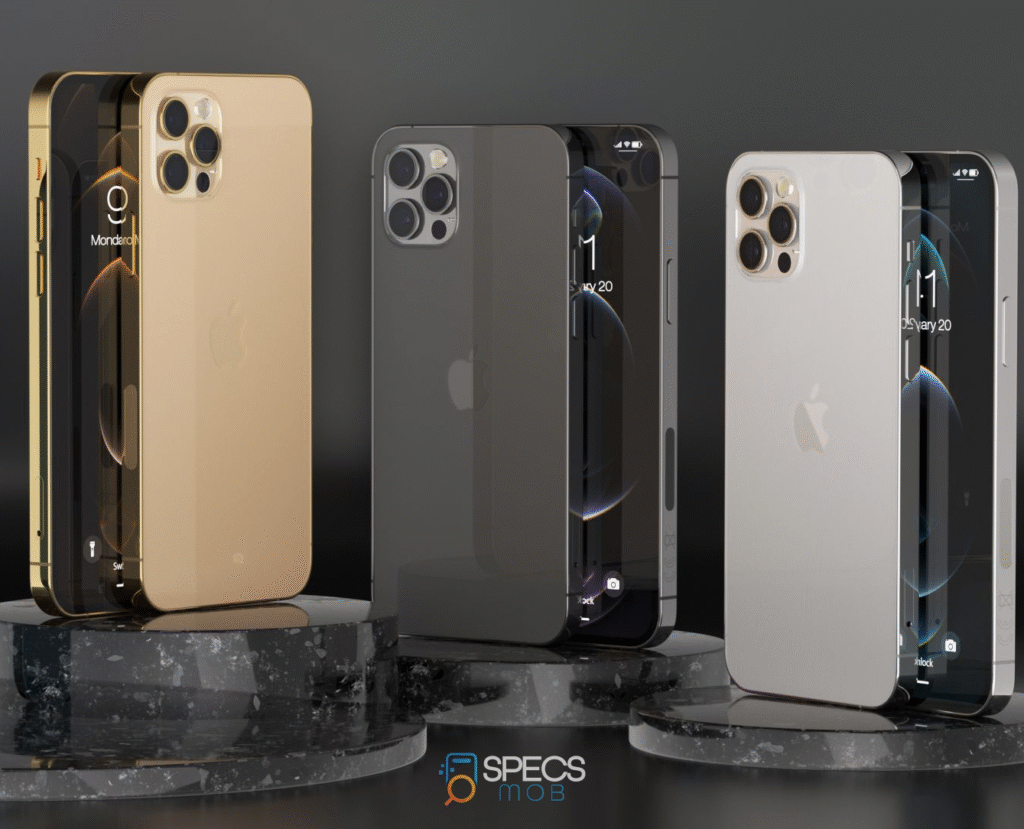
- With its polished stainless steel frame, oleophobic Ceramic Shield front, matte glass back, and IP68 dust and water resistance rating, the chassis is a fantastic example of engineering. Available colors consist of silver, graphite, gold, and pacific blue. Weighs 189 g, with dimensions of 146. 7 x 71. 5 x 7. 4 mm.
- Display: 6. 1″ Retina XDR OLED display offering touch sensitivity at 120 Hz, 600 nits brightness, 460 ppi resolution, and a pixel count of 1170 x 2532. HDR10, a wide color gamut, and support for Dolby Vision. Real Tone.
- Chipset: Hexa-core (5nm) Apple A14 Bionic chipset (2×3. 1 GHz Firestorm + 4×1. 8 GHz Icestorm with 3. 1GHz Turboboost) equipped with a 16-core Apple NPU, 4-generation four-core Apple GPU, and Apple CPU
- Memory: 128/256/512GB of internal storage; 6GB of random-access memory
- triple 12MP rear camera: a 26mm wide-angle, f/1. 6, OIS, Dual Pixel AF camera; a 13mm ultrawide-angle, f/2. 4, 120-degree field of view; a 52mm telephoto, f/2. 0, OIS, 2x optical zoom; and a dual-LED slow-sync flash. Night Mode, Deep Fusion and Smart HDR 3.
- Wider dynamic range, spatial sound, OIS + EIS, Dolby Vision, and video recording at 2160p@60/30 fps and 1080p@30/60/120/240 fps
- Front camera: Dual camera: 3D TOF camera, 23mm 12MP f/2. Deep Fusion, Smart HDR 3, and Night Mode; two front-facing cameras with HDR mode. Video recording at 2160p@60/30fps and 1080p@30/60/120fps provides a broader dynamic range, spatial sound, and EIS.
- Wi-Fi a/b/g/n/ac/6, Bluetooth 5. 0, dual SIM, 5G, 4G, GPS with A-GPS, GLONASS, GALILEO, and QZSS, NFC, and an Apple U1 chip for ultrawideband connectivity.
- 2,815 mAh battery featuring 15 Qi wireless charging (MagSafe) and 20W rapid charging
- Miscellaneous: a special TrueDepth camera for face ID, a taptic engine, and two speakers
Furthermore, the appeal of the iPhone 12 Pro is lessened by Apple’s questionable decision to restrict camera hardware enhancements to the iPhone 12 Pro Max. Since Apple is preventing users from accessing the new 12MP sensor with larger pixels and sensor-shift stabilization unless they buy the 12 Pro Max, not all consumers will be inclined to choose a larger phone. We think that instead of relying on last year’s camera technology, the iPhone 12 Pro ought to have camera hardware of the same quality.
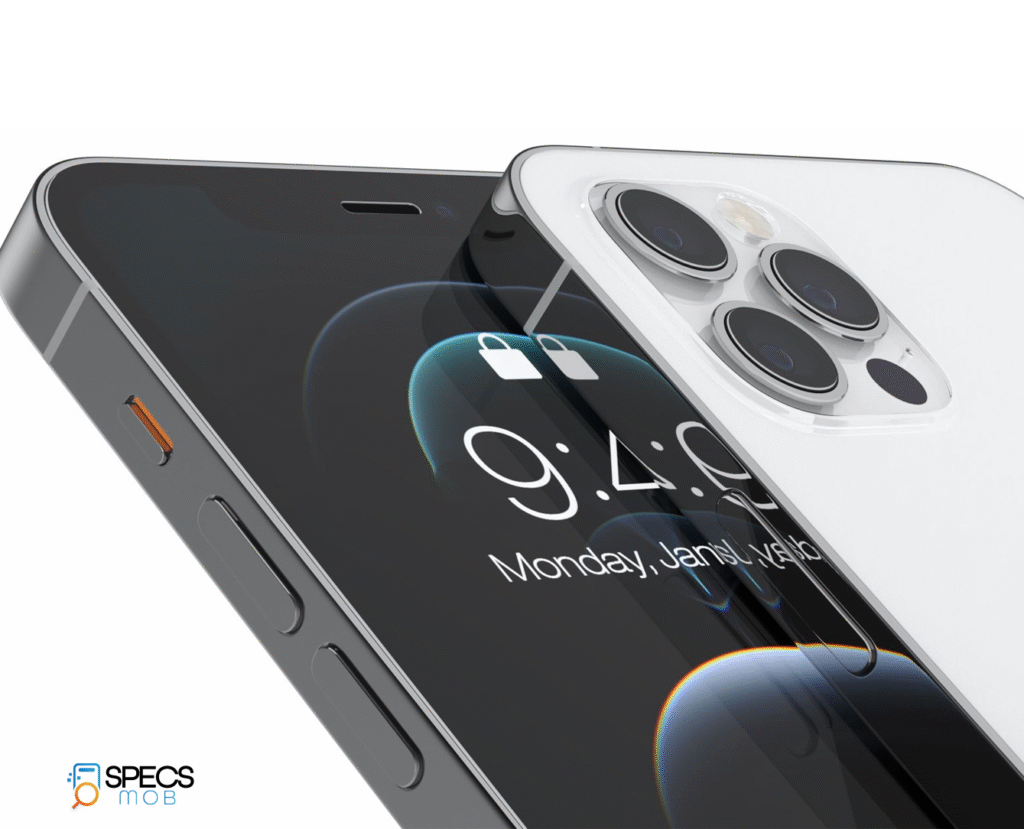
Finally, Apple announced that they would discontinue the inclusion of a charger or headphones with this phone, which is priced at over $1,000, in one of the most controversial decisions in the industry.
The packaging for this year’s iPhone 12 Pro is one of the most minimal we have ever encountered for a smartphone. Only the phone itself and a USB-C/Lightning cable are provided. There are no chargers or headphones included. Apple assumes that you already possess these items or, even better, buy them separately.
Additionally, there is a small sleeve within the package that holds an Apple logo sticker along with the SIM ejection PIN. Since we already possess those items, Apple ought to have skipped the hassle of including them. In fact, there’s no requirement for a box either; simply encase the iPhone 13 with bubble wrap.
Well, we’re a bit disappointed, but the price of the iPhone 12 Pro is also a little high. Let’s take a look at what it has to offer for our hard-earned cash in the pages ahead.
Design:
The iPhone 12 Pro may be tempting due to its enhanced features, but the Series’ redesigned appearance will have a major impact on many iPhone 12 Pro purchases. Some of us on the team share this attitude.
The iPhone 4 and 5 had legendary designs. We have been waiting for their restoration ever since seeing it replicated on iPads, and it is now taking place. This redesign of the iPhone Series 12 is more likely to be remembered than its much-heralded features, such as 5G.
The new Ceramic Shield glass, which is made by Corning and has microscopic ceramic crystals added to make this year’s screen glass more durable, is the centerpiece of the revamped design. The new screen glass is said to be four times more breakproof than that of the iPhone 11, according to accounts. The drop test videos that all of these fans have posted online suggest that the new iPhones are far more shatter-resistant.
The Ceramic Shield also features Apple’s oleophobic coating for improved smudge resistance and is ion-strengthened against scratches. Fingerprint smudges are very easy to wipe away, even if scratch-resistant screen glass does not exist right now.
The rear panel is gorgeous, featuring the same frosted glass as the iPhone 11 Pro in a flat design. The back panels of the iPhone 12 series are not made of the same Ceramic Shield substance. They are just as resistant to cracking and scratches as the iPhone 11 because they are the same as the ones from the year before. Although it differs from what you get in the front, it’s not all that awful.
However, the frosted layer on the back glass provides better protection against scratches. Based on our experience with the iPhone 11 Pro, objects in your pocket can scratch it, but these scratches are easily removed with a bit of rubbing and wiping.
The back panel of the iPhone 12 Pro is quite different from that of the iPhone 12. It has a frosted panel and a shiny, mirror-like camera square. The new flat frame, which replaces the iPhone 12’s lighter and frosted aluminum chassis with this stunning, shiny stainless steel piece, is also in the same vein. You cannot purchase an iPhone with a completely matte finish this year.
The steel frame of the iPhone 12 Pro receives luxury points because it gives the gadget a premium feel. The 12 Pro, for the record, is obviously flat and capable of standing upright on its own. However, the frame’s extreme glossiness draws fingerprints and is hard to keep clean. It develops ugly smudges after only 30 minutes of usage.
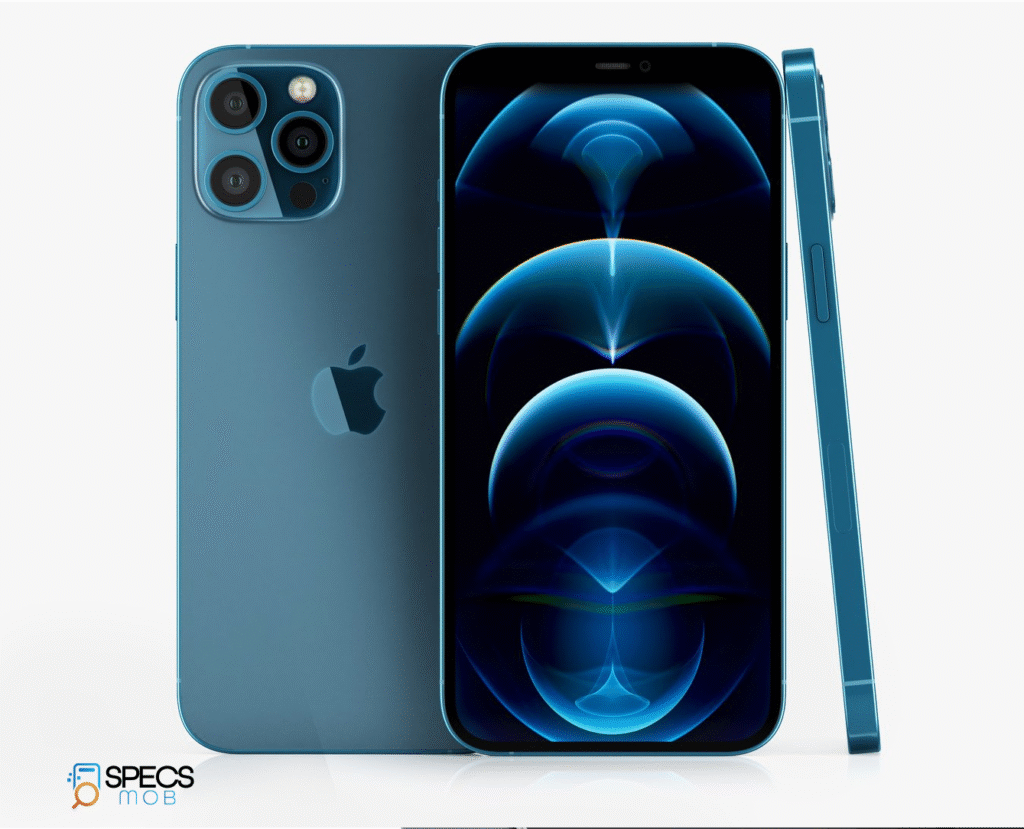
In addition, stainless steel is heavier than aluminum. The iPhone 12 and 12 Pro are the same, with the exception of the extra telecam and the LiDAR scanner. But we believe that the iPhone 12 Pro is 35 grams heavier than the regular iPhone 12 because of its frame.
The frame’s lack of grip is its worst attribute, last but not least. It can be difficult to pick up the iPhone 12 Pro from your nightstand or desk when it’s not in a case, and you run the risk of dropping it in the process. It’s so awesome!
Despite the iPhone 12 Pro’s IP68 certification for dust and water resistance, Apple has further enhanced its water protection with the new design. The iPhones can now endure water depths of 6 meters for 30 minutes with certainty. The Ceramic Shield and this make the 12th generation one of the strongest non-rugged smartphones on the market.
The 6.1″ Super Retina XDR OLED screen of the Apple iPhone 12 Pro is a bit bigger than the one on the iPhone 11 Pro.The notch remains big despite the tiny bezels.
One of the most persistent rumors this year was the 120Hz ProMotion display, which never came to pass. It’s depressing for reasons we’ll never know why, but even the more expensive Apple flagship models continue to have 60Hz displays. That 5G connection would have been a welcome upgrade, and we would have been happy to swap it for 120Hz. It is what it is.
The same characteristics as the iPhone 11 Pro are found inside that hideous notch: a 12MP selfie camera on the right, a stereo speaker/earpiece in the middle, and a Structured Light 3D camera on the left. Face ID is presently your only option for biometric security, and it seems that Apple has no intention of introducing a next-generation Touch ID sensor. It’s really too bad that there’s only a face unlock feature available, given how frequently we are required to use masks.
The screen is entirely flat. Not even a 2.5D finish can be seen on the edges. The rear panel in our instance is made of frosted graphite and is also flat, giving it a great appearance. The Apple logo, as always, is a small mirror.
The somewhat protruding camera square has three 12MP cameras: primary, telephoto, and ultrawide. Additionally, the LiDAR sensor and dual-LED flash are located here. The square glass at the rear is so polished and has rounded corners that it nearly resembles another mirror.
Each of the three snappers is encircled by miniature metal rings, and a millimeter or so protrudes from the common glass. Finally, sapphire glass components that protrude about half a millimeter outside the rings safeguard each of these snappers.The phone’s camera system doesn’t seem like a big bulge and shakes less because of all this meticulous planning.
Since the iPhone’s robust sapphire glass components are the ones that touch the surface you set it on, there is a considerable risk of harming glass or other glossy surfaces, let alone other gadgets. As a result, even though the cameras are well protected, be mindful of where you put your iPhone. Don’t lay it on top of other phones, of course!
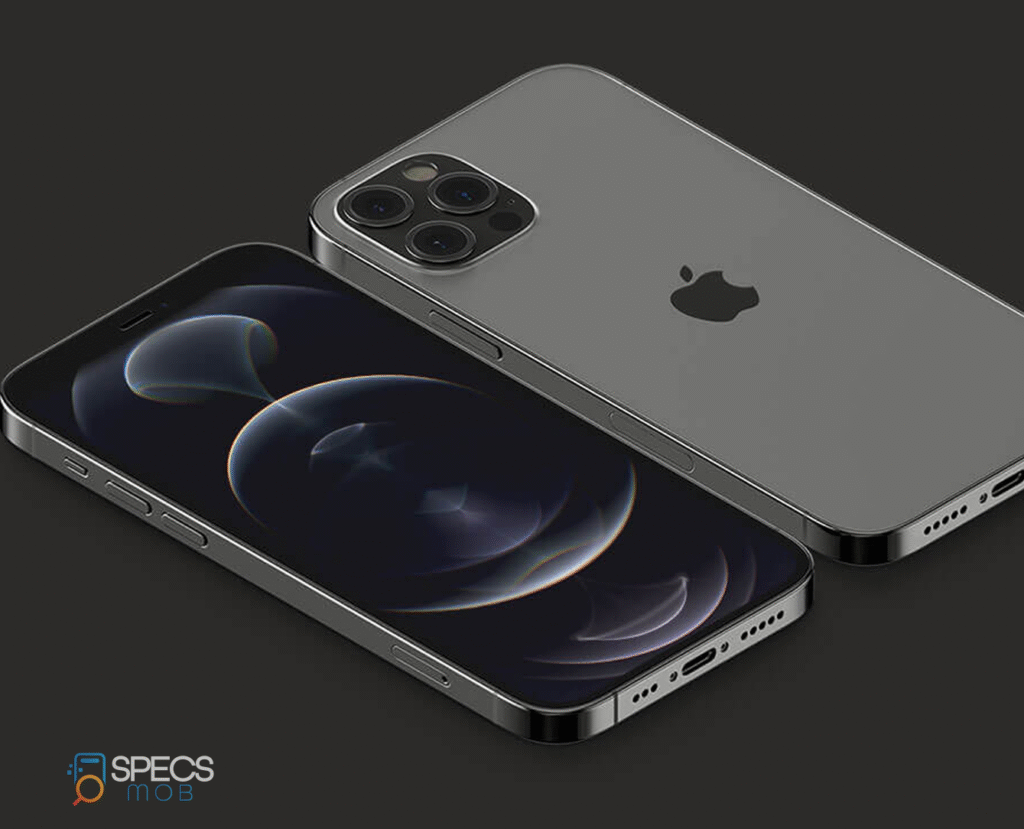
Apart from the SIM tray being shifted to the left, the frame may have a different design, but it otherwise has no surprises. On the left side are the flat volume keys and the traditional silencer switch. The Lightning connection, the second stereo speaker, and the mouthpiece are at the bottom, while the Side/Power button is the only one on the right.
The iPhone 12 Pro is the same size as the iPhone 12, but 3mm taller than the iPhone 11 Pro. Even if it weighs the same as its predecessor, it is a bit heavier than the iPhone 12. The redesigned frame makes it feel somewhat safer and fits better in the hand than the iPhone 11 Pro.
In contrast to the iPhone 12’s matte frame, it doesn’t have the same sense of security in the hand. Despite the sharp borders, the glossy frame blends perfectly with the glass and has little to no traction. You have to make a case for this amazing number, even if it’s sad. I’m sorry.
We really like the angular form and flat surface, and we certainly appreciate the enhanced water resistance and shatterproof glass. It is most likely an amazing technological achievement that warrants more research. However, since the iPhone 12 Pro’s cons far outweigh its pros, we think it merited a more thorough frame polish than this shiny mess.
Display :
The iPhone 12 Pro has a 6.1-inch OLED screen with sharp, clear quality thanks to its resolution of 1,170 by 2,532 pixels and 460 pixels per inch. It has Ceramic Shield protection and an oleophobic coating for increased smudge resistance. The screen supports HDR10 and Dolby Vision. All well-known streaming services offer high-resolution HDR video.
The Apple iPhone 12 Pro display has the Taptic Engine-powered Haptic Touch feature in addition to Wide Color compatibility and True Tone modifications.The iPhone 12 Pro’s screen is, in fact, very similar to that of the iPhone 11 Pro.The screen is slightly larger this time, measuring diagonal distance at 6.1 inches, as opposed to the 11 Pro’s 5.8 inches.
A modest increase in resolution is enough to maintain a pixel density of 460 ppi. In all other respects, we’re still seeing an OLED screen with a large notch, a refresh rate of 60 Hz, and touch sampling at 120 Hz.
No, Apple did not introduce the speculated high refresh rate display. This won’t be a big deal if you’re already firmly established in the iOS ecosystem or if you’re still using an older device from a different manufacturer with a refresh rate of 60 Hz.
If you come from the Android camp, where even mid range smartphones will have high refresh rate displays by 2020, you’ll be a bit annoyed that the expensive iPhones don’t have them. We presume we’ll have to wait for the iPhone 13 Pro.
According to Apple, the iPhone 12 Pro display has an average brightness of 800 nits, while the iPhone 12 display has an average brightness of 600 nits. Both phones have a maximum brightness of 1,200 nits.
The iPhone 12 Pro’s maximum brightness was tested at 802 nits using our unique testing configuration, which is exactly what the display provides. The lowest brightness is surprisingly low, at 1.8 nits. With such a bright display, you wouldn’t even realize that no iPhone has the highest auto boost.
With a maximum variation of 3.0 and an average deltaE of 1.9, the iPhone 12 Pro’s screen has amazing color accuracy when compared to sRGB targets. When DCI-P3 material is shown, the iPhone 12 Pro automatically switches to this color space, which is fully supported by DCI-P3. The iPhone 12 Pro maintains its exceptional color accuracy, as it always has, even at its lowest brightness level of 1.8 nits.
Battery Life:
When compared to sRGB goals, the iPhone 12 Pro’s screen is very color accurate, with a maximum variance of 3.0 and an average deltaE of 1.9. When DCI-P3 material is shown, the iPhone 12 Pro automatically switches to this color space, which is fully supported by DCI-P3.
The iPhone 12 Pro maintains its exceptional color accuracy, as it always has, even at its lowest brightness level of 1.8 nits.
When we tried to drain the battery while playing games, the iPhone 12 Pro’s GPU turned out to be more efficient, giving us an extra hour of gameplay compared to the iPhone 11 Pro. The performance chapter will provide additional details on this.
The Apple iPhone 12 Pro, like the iPhone 8, X, XS, and 11 series, features USB Power Delivery for rapid battery charging. As we have already stated, Apple sells this $1,000 phone without a charger. However, you may purchase a USB-PD compatible converter or the Apple 20W PD charger separately.
Performance:
The new LiDAR scanner was given a lot of hype by Apple for good reason. The miniaturization of LiDAR (Light Radar, Light Detection and Ranging, also known as Laser Imaging, Detection, and Ranging) technology is one of Apple’s most significant achievements. It first emerged on the iPad Pro before making its way onto the iPhone 12 Pro.
By measuring the reflections of the laser beams it emits, the LiDAR scanner calculates distances. As a result, the smartphone is able to produce a remarkably realistic three-dimensional picture of an item and place it practically anywhere. Are you thinking about buying new furniture? This will be perfect. Things that cannot be physically compared side by side can have their sizes compared using LiDAR.
The LiDAR scanner functions similarly to a high-end digital tapeline in that it can only be used for distance measurement due to its high degree of accuracy. You may also choose a distance and see simulated walls in real-time at that distance. The LiDAR scanner may be a helpful tool for interior designers and other experts.
You can enjoy a fantastic augmented reality experience with supported games and applications thanks to LiDAR’s strong augmented reality features, which are an added benefit.
Another advantage of this technology is that it allows for a quicker and more accurate focus in low light. Furthermore, the sensor is light-insensitive and capable of operating in a completely dark room, so you may now capture your first low-light images with great subject separation and blur.
To sum up, LiDAR-compatible apps, such as the 3D Scanner App, let you measure distances, scan and position objects anywhere, and export them for usage in your projects. Of course, there are many games where you can benefit from the improved augmented reality experience.
The iPhone 12 family is powered by Apple’s A14 Bionic CPU. It is the first 5nm chipset available for purchase, with a stunning 11.8 billion transistors, 40% more than the A13.
The A14 has a six-core CPU, much like the newest Apple CPUs. It features four smaller Icestorm cores operating at 1.8 GHz and two larger Firestorm cores operating at 3.1 GHz, with TurboBoost technology enabling the latter to run at 3.1 GHz as needed. The enhanced CPU should perform 50% better than the A13.
The new 4-core Apple GPU is expected to be up to 50% faster than the previous year’s iPhones. Next is the new 16-core NPU for machine learning, which increases AI performance by 70%. The iPhone 12’s non-Pro variants come with 4GB of RAM, while the Pro models come with 6GB.The entire iPhone 12 series supports 5G connection since it also includes Qualcomm’s X55 5G modem.
The upgraded camera quality is also mostly attributable to the new A14 Bionic chip and its ISP. The strength of the A14 enables additional capabilities like Dolby Vision recording, Night Mode, Deep Fusion, Smart HDR 3, and more.
The fact that the iPhone 12 and iPhone 12 Pro are the fastest iPhones ever should not be surprising. As usual, the Apple A14 has the most powerful CPU currently available. Although the Apple A14 Bionic chip may make the iPhone 12 Pro the fastest smartphone in the world, this is not one of the reasons to purchase a Series 12. Although they are three years old, iPhones have consistently performed well. The improved ISP and improved machine learning capabilities of the A14 processor are its most important features, as they advance computational photography to a higher standard.
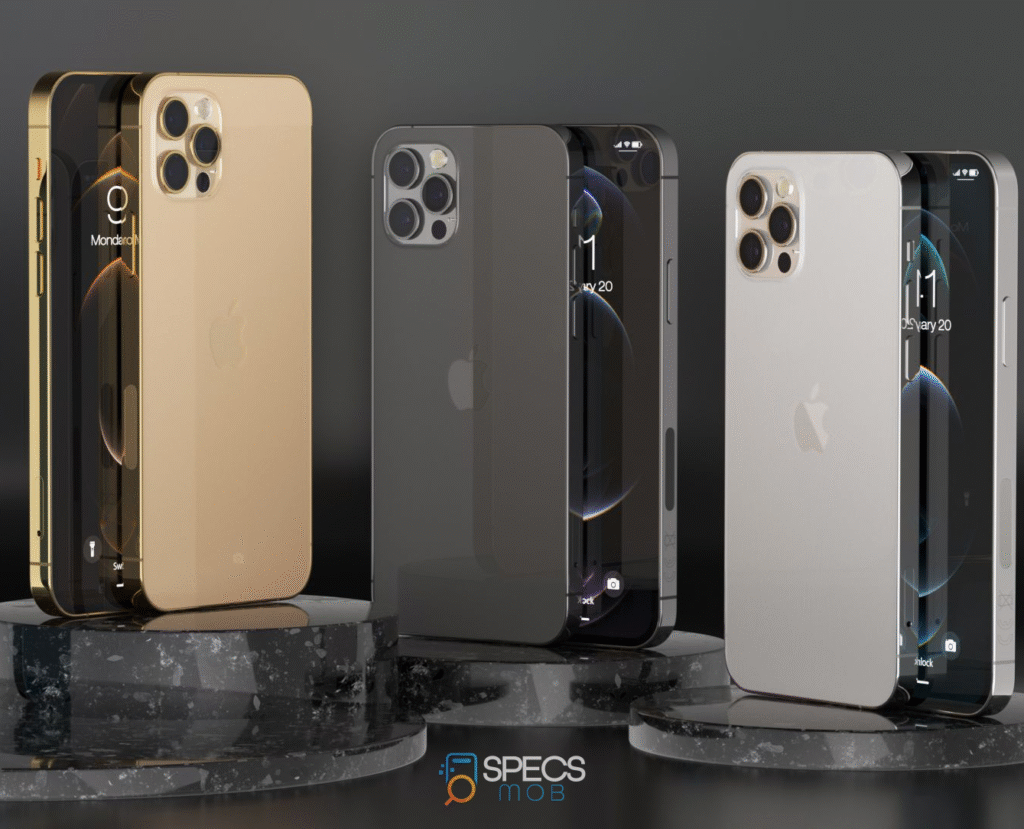
It shouldn’t come as a surprise that the iPhone 12 and iPhone 12 Pro are the quickest iPhones ever made. The A14 is still the most powerful CPU available, just like Apple’s earlier models. Although the Apple A14 Bionic chip might make the iPhone 12 Pro the fastest smartphone in the world, this won’t be one of the reasons to purchase a Series 12. iPhones have consistently performed well, even though they are three years old. What truly matters and advances computational photography to a new level are the A14 processor’s new features, such as the improved machine learning and the updated ISP.
Given the excellent frame rates obtained on the offscreen benchmarks, we may say with confidence that the 120Hz displays on the iPhones are already many years behind the times.
The iPhone is great for gaming, but the iPhone 12 Pro has a superior cooling system that lowers throttling during prolonged benchmarks or gaming sessions. The iPhone 12 gets quite warm around the frame and back glass, whereas the Pro version gets a bit warm. Additionally, it’s clear.
With a stability score of 90.9%, the iPhone 12 Pro passed the 3D Mark Wild Life Stress Test, which replicates 20 repetitions of the Wild Life graphic test.Initially, the iPhone 12 had an 84% stability rating. Nonetheless, it dropped to 75% after we loaded apps like Facebook, Skype, WhatsApp, Messenger, Bluetooth devices, and others. In contrast, the stability of an iPhone 11 Pro Max with a similar volume of traffic is 82%.
The results were, not unexpectedly, the consequence of a tough GPU test. We put Call of Duty Mobile through its paces on the iPhone 12 Pro and 11 Pro and found that both devices performed similarly, with no overheating or noticeable battery loss. The iPhone 12 Pro was able to play that game for 9 hours and 39 minutes, while the iPhone 11 Pro could only do so for 8 hours and 36 minutes.
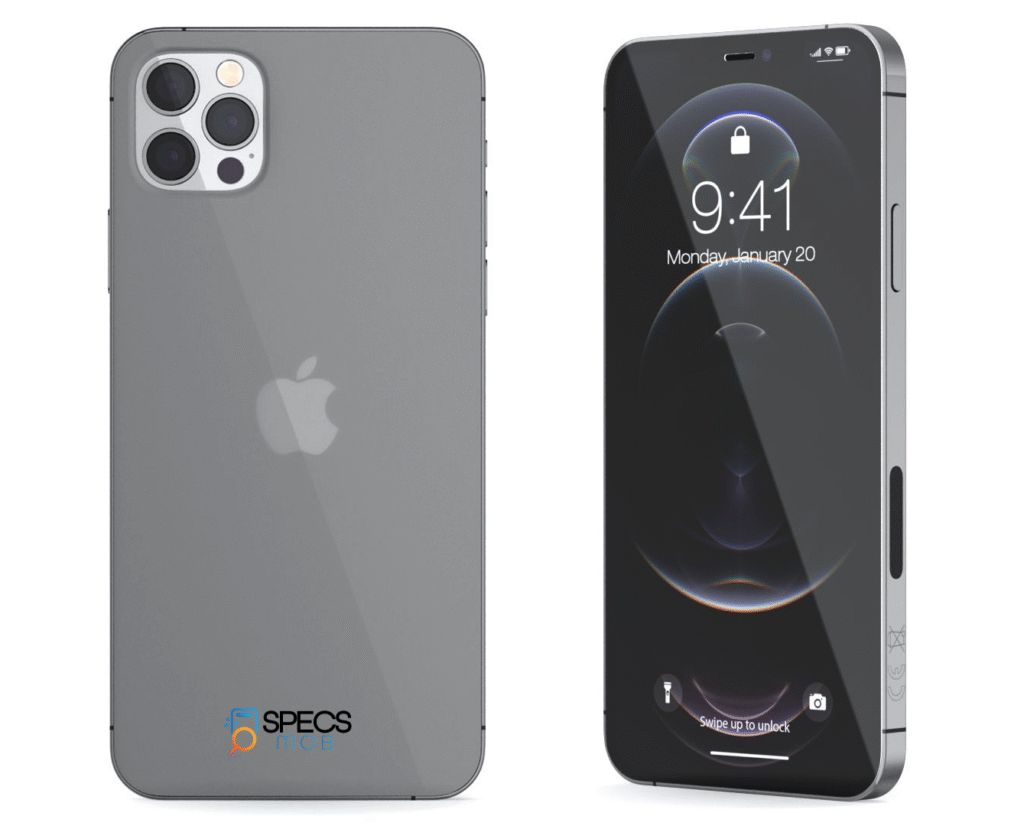
Gamers should choose the iPhone 12 Pro over the iPhone 12 because of its better cooling and stability. It also offers about an hour more playing time than the iPhone 11 Pro.
Summary :
The iPhone 12 Pro has a number of premium features over the iPhone 12, including a stainless steel frame, a triple camera configuration with a telephoto lens, and a LiDAR scanner. It boasts a 6.1″ Super Retina XDR OLED screen with Ceramic Shield for enhanced durability, even if it still doesn’t have a 120Hz refresh rate. The A14 Bionic chip improves low-light focus, photography, and augmented reality in addition to providing better performance. The Pro model has better heat management and a longer gameplay session than its forerunner. However, it includes nearly all of the same features as the iPhone 12, but it does not come with a charger or headphones. In spite of its strength and elegance, the glossy frame is slick and easily covered in fingerprints. Despite some real-world limitations, it is generally robust.
When Apple launched the iPhone X in September 2017, it was not just an upgrade merely but a revolution. This much-hyped model celebrated Apple’s ten-year anniversary of the iPhone with a redefinition of smartphone design featuring an edge-to-edge OLED screen, Face ID, and the A11 Bionic chip. And for this reason, it was also known as iPhone 10.
Though it will mark a decade in 2027 since its release, the iPhone X specifications still fascinate consumers seeking top-of-the-line Apple performance, that too for half the price of the newer models available.
Even if you are comparing it to the latest iPhone models or considering a refurbished set in 2025 at a reasonable price, this detailed and comprehensive iPhone X review breaks down everything from features and performance to camera quality and battery life.
1: iPhone X Versions and Model Numbers
The iPhone X was launched in various regional iterations with model numbers A1865, A1901, A1902, and A1903. Each was for various market bands and carriers:
1.1: A1865
Region: USA, Hong Kong, Australia, New Zealand, China
Network Support: GSM / CDMA / HSPA / LTE
1.2: A1901
Region: EMEA, UAE, LATAM, Canada, USA (AT&T / T-Mobile), Singapore
Network Support: GSM / HSPA / LTE
1.3: A1902
Region: Japan
Network Support: GSM / HSPA / LTE
1.4: A1903
Region: Unknown market
Network Support: GSM / HSPA / LTE
Marking a ten-year anniversary, it was also termed Apple iPhone 10 or Apple iPhone Ten. The device offered consistent design and features across all versions, with only slight variations in network bands.
2: iPhone X Design and Build Quality
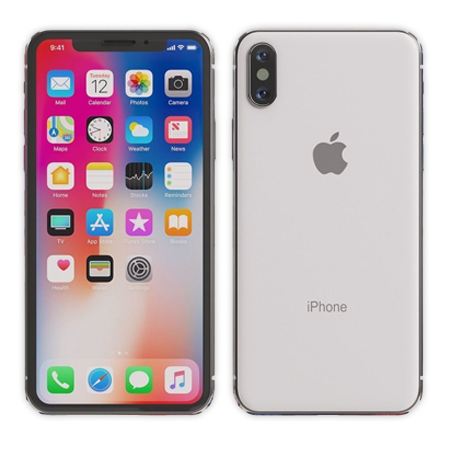
Apple called the iPhone X design “the smartphone of the future,” and for the right reasons. Even today, it feels remarkably contemporary. The phone has a 5.8-inch Super Retina OLED screen with thin bezels and the signature notch that contains the TrueDepth camera for Face ID.
This iconic model is made up of Corning-produced glass on both sides and a stainless-steel frame, providing it with a solid, high-end hand-feel. Weighing 174 grams, the iPhone X finds an ideal balance between portability and durability. It has an IP67 rating, which protects water and dust for up to 30 minutes at a depth of 1 meter.
Colors were minimalistic, including Space Gray and Silver, denoting Apple’s trademark simplicity. The lack of the home button brought with it a gesture-based system that still governs iOS navigation in the present times.
3: iPhone X Display and Visual Experience
The screen was arguably the most revolutionary aspect of the iPhone X specifications. Apple’s initial OLED screen featured HDR10 and Dolby Vision, providing deep blacks and lively contrast ratios.
3.1: Display
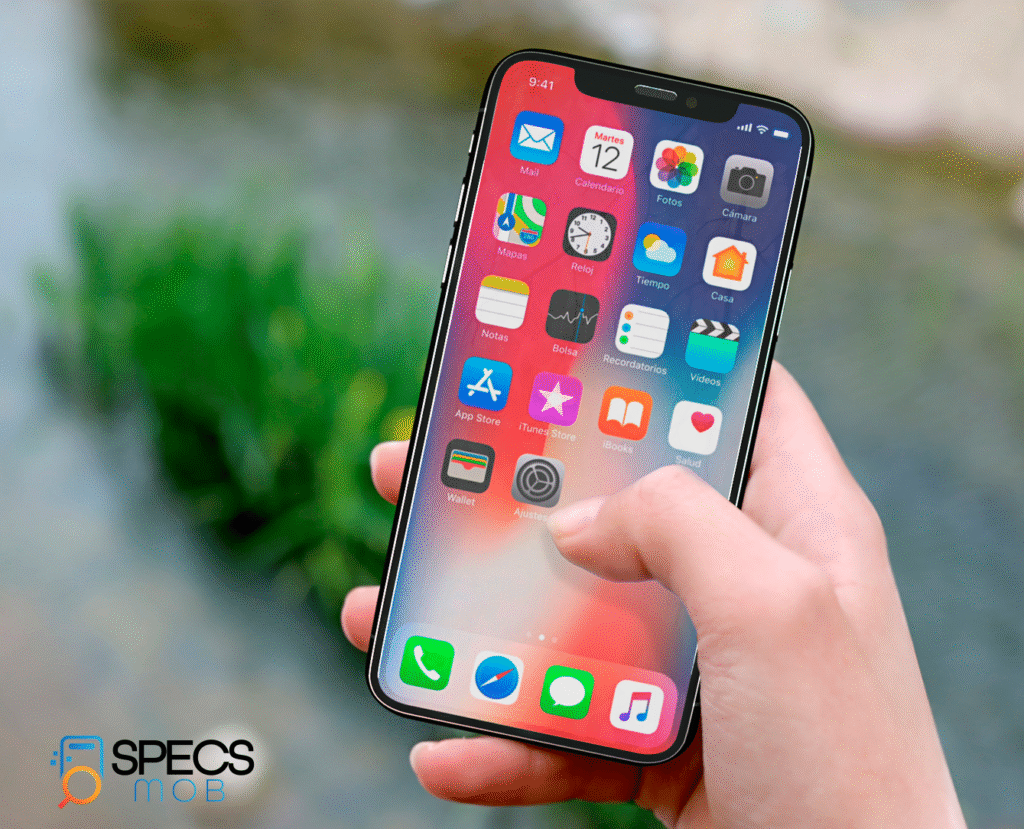
- Type: Super Retina OLED, HDR10, Dolby Vision
- Size: 5.8 inches (~82.9% screen-to-body ratio)
- Resolution: 1125 × 2436 pixels (~458 ppi density)
- Brightness: 625 nits (HBM)
- Protection: Scratch-resistant glass
- Touch Technology: 3D Touch, True Tone display
The 19.5:9 aspect ratio introduced cinematic visuals, making streaming and gaming notably immersive for its time. Even today, iPhone X display quality competes with mid-range latest phones, with contrast and sunlight legibility still majestic.
4: iPhone X Features Overview
Even in 2025, most of the iPhone X specifications and features remain iconic:
- A11 Bionic chipset provides smooth multitasking and gentle gaming performance.
- Face ID is still precise and secure.
- Dual 12 MP camera still takes vibrant photos with optical zoom.
- Super Retina OLED display provides superior contrast.
- Wireless charging provides everyday convenience.
- Stainless-steel frame provides durability.
Apple’s optimization emphasis on software ensures the iPhone X performance continues to be fluid on iOS 16, despite updates being discontinued.
4.1: iPhone X Specifications
| Category | Specification |
| Network | Supports GSM, HSPA, and LTE networking technologies to ensure easy global connectivity. |
| Launch | Released officially on September 12, 2017, and available for sale on November 3, 2017. |
| Body | Dimensions 143.6 × 70.9 × 7.7 mm and 174 grams in weight, with glass panels on both sides and a stainless-steel frame for durability. |
| SIM | Uses a Nano-SIM, has IP67 dust and water resistance (up to 1 meter for 30 minutes) and supports Apple Pay (Visa, MasterCard, AMEX certified). |
| Display | 5.8-inch Super Retina OLED display with HDR10, Dolby Vision, and 625 nits peak brightness (HBM). Provides 1125×2436-pixel resolution, 19.5:9 aspect ratio, and ~458 ppi pixel density. Also comes with scratch-resistant glass and 3D Touch. |
| Platform | Firstly released with iOS 11.1.1, upgradable up to iOS 16.7.12. |
| Chipset | Powered by Apple A11 Bionic (10 nm) chipset. |
| CPU | Boasts a Hexa-core 2.39 GHz configuration featuring 2× Monsoon high-performance cores and 4× Mistral low-power cores. |
| GPU | Integrated with Apple’s proprietary 3-core GPU for enhanced gaming and video processing. |
| Memory | Comes in 64GB and 256GB NVMe storage variants supported by 3GB RAM. |
| Main Camera | Dual 12 MP (f/1.8 wide, f/2.4 telephoto), dual OIS, 2× optical zoom, Quad-LED flash, HDR, 4K@60fps |
| Selfie Camera | 7 MP (f/2.2), SL 3D sensor, HDR, 1080p@30fps |
| Sound | Does stereo audio output; lacks a 3.5mm headphone jack. |
| Connectivity | Supports Wi-Fi (a/b/g/n/ac), Bluetooth 5.0, GPS, GLONASS, GALILEO, QZSS, NFC, and Lightning USB 2.0 port. |
| Sensors | Face ID, accelerometer, gyro, proximity, compass, barometer |
| Battery | Inbuilt Li-Ion 2716 mAh battery with 15W fast charging (PD 2.0), charges to 50% in 30 minutes; supports Qi wireless charging. |
| Talk Time | Delivers up to 21 hours of talk time on a 3G network. |
| Colours | Space Gray, Silver |
| SAR | 1.09 W/kg (head), 1.17 W/kg (body) |
| Performance Scores | AnTuTu 233100 (v7), GeekBench 10215 (v4.4), GFXBench 28 fps (ES 3.1 onscreen) |
| Battery Endurance | Provides an estimated 74 hours of mixed-use endurance. |
| Price (approx) | Approximately €100 used/refurbished market in 2025 |
5: iPhone X Performance and Hardware Power
When Apple released the iPhone X, it ushered in the world to the A11 Bionic chip, a processor that was so state-of-the-art when it came out that it raised the bar for smartphone performance. Even after alll these years, the iPhone X performance is shockingly robust for common activities like browsing, streaming, photography, and even casual gaming.
The A11 Bionic (10 nm) SoC is driven by a hexa-core CPU, comprised of two high-performance Monsoon cores and four efficiency Mistral cores. The design makes it easy for the iPhone X to alternate between demanding apps and power-sipping background tasks. Paired with a three-core Apple GPU, it provides smooth and seamless graphics for gaming apps such as PUBG Mobile, Asphalt 9, and Call of Duty Mobile, but with intermittent frame drops relative to contemporary flagships.
GeekBench scores continue to have the iPhone X beating mid-range Android phones years after its release. The benchmark scored 10,215, while its AnTuTu score of 233,100 (v7) indicates robust real-world speed in multitasking as well as animations.
Upgrade users from previous models, such as the iPhone 7 or 8, will immediately feel the difference with the quicker app launch, smoother transitions, and stable iPhone X specifications optimization under iOS 16. If you are looking to upgrade, multiple vendors still have a decent stock to purchase.
6: iPhone X Battery Life and Charging
Battery life has always been the topic of controversy for Apple devices, and the iPhone X battery life still keeps up reasonably well in 2025. It contains a 2716 mAh Li-Ion battery, which can seem small by the current generation’s standards, but Apple’s efficiency makes up through software adjustment.
In real-world use, the iPhone X lasts between 21 hours of talk time over 3G and approximately 8–9 hours of screen-on time for various activities such as streaming, calls, and light gaming. This gives it a battery life rating of 74 hours, according to GSMArena’s test results.
It is charged by 15W fast charging (PD 2.0), charging the battery from 0 to 50% in 30 minutes, not lightning-quick, but handy. It also features Qi wireless charging, a first-time feature for Apple then, which makes for effortless top-ups without needing to plug in the cables.
Need a quick battery life tip from an expert?
Since the iPhone X is now several years old, getting the battery replaced with an official Apple component can significantly revive its longevity, usually adding 20–30% to its life.
Assuming you want a small Apple phone but one that can last throughout the day, then the iPhone X specifications and features place it well for consideration, particularly for those who value build and display quality over pure battery life.
7: iPhone X Camera Review
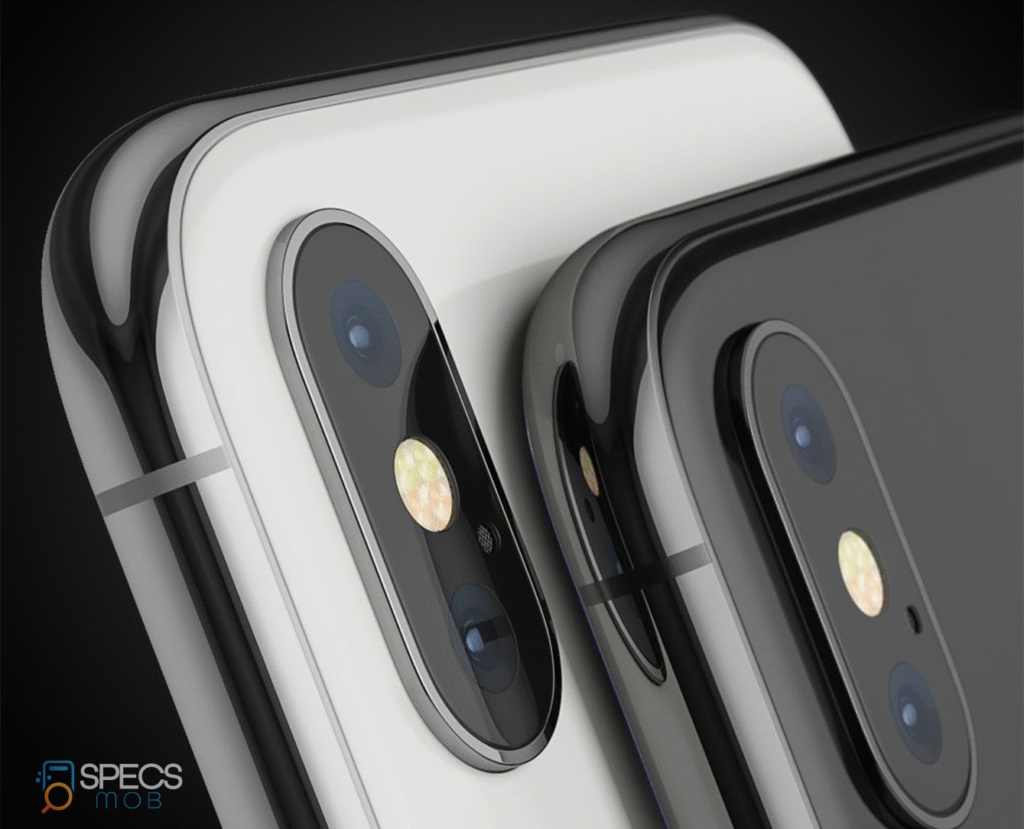
The iPhone X camera system might not be up to the standards of newer Pro models, but it is an incredible performer even now. The dual-lens combination, 12 MP wide (f/1.8) and 12 MP telephoto (f/2.4), ushered in a new generation of iPhone photography with a focus on depth, dynamic range, and stability.
With dual optical image stabilization (OIS) and Apple’s accurate color calibration, images taken on the iPhone X show outstanding detail and lifelike tones. Portrait Mode, based on the TrueDepth camera system, was the first to bring professional-grade depth effects to selfies.
7.1: Rear Camera Capabilities:
- Dual 12 MP sensors with 2x optical zoom
- 4K video recording at 24/30/60fps
- Slow motion: 1080p at 120/240fps
- Quad-LED True Tone flash for natural lighting
- HDR for both photo and panorama modes
7.2: Front Camera Capabilities:
- 7 MP (f/2.2) sensor with SL 3D depth sensor
- 1080p video recording at 30fps
- HDR support for better contrast
Even in 2025, you can take clear daylight photos, adequate low-light images, and silky smooth 4K videos. Relative to Android phones released in the same period, the iPhone X remains superior when it comes to consistency and color accuracy.
Let’s say you are writing a blog or creating visual content, you can rely on the iPhone X camera quality for social media, portraits, and short clips. While one of its cons could be lacking ultra-wide and macro modes now found in newer models, it delivers where it matters most.
8: iPhone X Display and Multimedia Experience
The Super Retina OLED display remains one of the strongest aspects of the iPhone X specifications sheet. The 5.8-inch screen with HDR10 and Dolby Vision support ensures deeper blacks, rich contrast, and true-to-life colors. The 458 ppi pixel density guarantees crisp visuals. Does not matter if you are reading, gaming, or watching movies.
Even now, Apple’s calibration precision enables the iPhone X screen to be comparable to some mid-range OLED screens from newer devices. The infinite contrast ratio, combined with a sunlight visibility rating of 5.013, provides decent readability outside, which cheaper phones still cannot match.
For streaming services such as Netflix, YouTube, or Disney+, HDR content really pops. Stereo speakers also improve the multimedia experience with crisp vocals and a notable depth for such a small phone. The missing 3.5mm headphone jack may be limiting, but wireless audio or Lightning headphones have become ubiquitous among most users.
9: Software and User Experience
The iPhone X was launched with iOS 11.1.1 at first, but it is still upgradable to iOS 16.7.12. It is one of the longest software lifespans for any smartphone. The consistency of Apple’s updates is one of the reasons that this model is still operating reliably and seamlessly today.
The move to gesture navigation (swipe from the bottom to get home, swipe up for Control Center) brought an even more fluid, intuitive experience to explore iPhones for users. But today, it is a feature on all the latest iOS versions.
Although Apple has discontinued the iPhone X, users who still own it or are planning to buy from other sources can still benefit from maximized app performance, top security levels, and integration of Apple Pay. Face ID, originally a point of controversy, now appears seamless and remains one of the most secure mobile biometric systems.
The iPhone X user experience as a whole is seamless, stable, and premium, a reflection of Apple’s hardware-to-software balance. It is still one of the finest creations of Apple. Let’s glance at some of the pros and cons of this 2017-ruling model.
9.1: Pros:
- Stunning OLED display with HDR support
- Premium stainless-steel design
- Reliable performance under iOS 16
- Dual cameras with OIS and excellent color balance
- Face ID and wireless charging
9.2: Cons:
- No 5G or headphone jack
- Limited iOS update support
- Moderate battery capacity
10: Frequently Asked Questions About iPhone X Specifications (FAQs)
1. What is the display size and resolution of the iPhone X?
The iPhone X has a 5.8-inch Super Retina OLED screen with a 1125 × 2436 pixels resolution and 458 ppi pixel density.
2. Is the iPhone X compatible with 5G?
No, the iPhone X has 4G LTE only, because 5G has been introduced with the iPhone 12 series.
3. What is the difference between iPhone X A1901 and A1865 models?
A1865 is compatible with CDMA and GSM networks (for countries such as the U.S. and China).
A1901 only supports GSM and LTE (for countries such as Europe and the Middle East).
4. How long does the iPhone X battery last?
Typical usage and it lasts around 8–9 hours of screen time and offers up to 21 hours of talk time on 3G.
5. Can the iPhone X still get software updates in 2025?
The iPhone X supports up to iOS 16.7.12, which is still stable and secure. But it does not get new major updates after that version.
6. How is the iPhone X camera in comparison to newer iPhones?
The iPhone X camera remains excellent for general photography purposes, with fantastic color and detail, although it does not have ultra-wide or night mode capabilities added on later models.
7. Is the iPhone X waterproof?
Yes, it is IP67-rated, i.e., can handle water immersion up to 1 meter for 30 minutes.
8. Should you buy a refurbished iPhone X in 2025?
Yes. If you can find one in good shape, it is a great choice for those who are looking for a premium iPhone experience on a limited budget.
The Apple iPhone XR was a turning point in Apple’s smartphone journey. Released in 2018, the XR followed the iPhone X and provided top-of-the-line performance at a lower price point. For consumers who wanted flagship performance without the Pro-grade price tag, the model was a quick hit. Even years after its release, the iPhone XR specifications remain relevant, with an effortless combination of design sophistication, hardware performance, and daily use that endures.
In this review, we will cover iPhone XR specifications, design, screen, camera, battery, and user experience, and compare its versions (A2105, A1984, A2107, A2108, and A2106) to enable you to know what makes this phone one of the most well-rounded releases from Apple.
1: iPhone XR Versions and Model Numbers
Apple released various iPhone XR versions to meet the needs of various global markets. Although with the same internal specifications, network bands, and SIM variants differ by region. They are the following:
1.1: A1984
Region: USA, Canada, Puerto Rico, U.S. Virgin Islands
1.2: A2105
Region: Global Market (Europe, Middle East, Asia Pacific)
1.3: A2106
Region: Japan
A2107
Region: Mainland China
1.4: A2108
Region: China, Hong Kong, Macau
Network Support: All devices support GSM / CDMA / HSPA / EVDO / LTE to provide wide compatibility. Nevertheless, A2107 and A2108 models feature dual physical SIMs, whereas global and U.S. models feature one Nano-SIM and one eSIM. This difference still proves significant for travelers or business users juggling multiple numbers.
2: iPhone XR Design and Build Quality
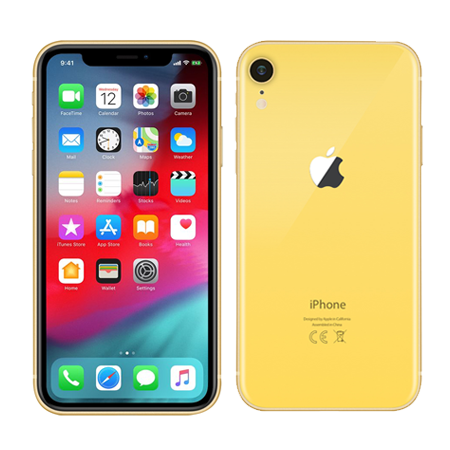
The design of iPhone XR is a perfect mixture of durability and class. Apple designed it using aerospace-grade aluminum (7000 series) for the body and glass from Corning on the front as well as on the back. It gets the sleek, minimalistic appearance of the iPhone X but adds bright colors such as Red, Yellow, Blue, Coral, White, and Black.
At 194 grams, the XR is substantial but not heavy. Its IP67 dust and water resistance is protective up to 1 meter for 30 minutes, which makes it functional for day-to-day mishaps. In contrast to stainless steel used in high-end models, aluminum gives a lighter touch and superior heat dissipation, an appropriate compromise between luxury and comfort.
Although released years back, the iPhone XR design language continues to feel fresh and up-to-date. Symmetrical bezels, glass finish, and color palette offer a pop in a world filled with colorless slabs. Apple even certified the XR for use with Apple Pay, with support for Visa, MasterCard, and AMEX, blending style and convenience.
3: iPhone XR Display and Visual Experience
One of the most controversial but also most well-liked features and specifications of the iPhone XR is its Liquid Retina Display. Apple’s engineers brought LCD to a quality that few rivals could match, with crisp color quality and a lot of brightness even without OLED screens.
- Display Type: Liquid Retina IPS LCD, 625 nits (HBM)
- Screen Size: 6.1 inches (~79.0% screen-to-body ratio)
- Resolution: 828 × 1792 pixels, 19.5:9 ratio (~326 ppi density)
- Protection: Scratch-resistant glass
- Technology: True Tone, Wide Color (P3), Tap to Wake
Critics have chastised the iPhone XR screen for its “HD-only” resolution, but the screen delivers with superior color management and precise calibration. With True Tone and P3 wide color gamut, images look natural and engaging. HDR content is not supported, per se, but Apple makes up for it with rich contrast and high peak brightness (625 nits) for comfortable outdoor viewing.
For video viewers and gamers, the Liquid Retina display still provides great sharpness for an ergonomic experience. The viewing angles are uniform, and the pixel density, while lower than OLED units, is adequate for occasional users. Coupled with Dolby sound support through stereo speakers, the iPhone XR specifications provide a well-rounded multimedia experience that feels high-end for its price point.
4: iPhone XR Features Overview
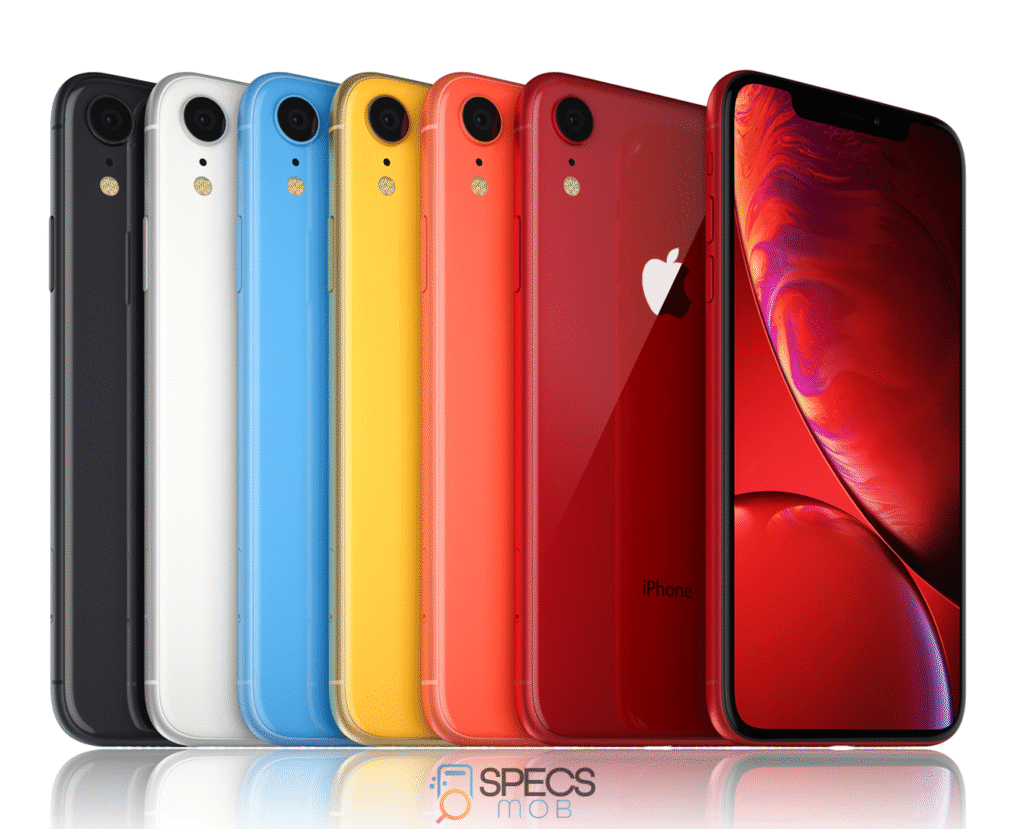
iPhone XR specifications and features extend beyond aesthetics. Apple designed the phone to feature flagship-caliber performance and security systems that compare with contemporary smartphones.
- Face ID: Fast and secure unlocking with facial recognition is made possible by the advanced TrueDepth camera system.
- Animoji & Memoji: Amusing personalization through facial tracking enhances user experience.
- Wireless Charging: Qi wireless charging capability dispenses with cable clutter.
- Apple Pay Integration: Certified for easy contactless payments.
- Water and Dust Resistance: IP67 rated, splash-resistant.
- Stereo Speakers: Clear and balanced sound quality for calls and entertainment.
- Software Longevity: Launched with iOS 12, presently upgradable to iOS 18.7, keeping the phone current in 2025.
Is iPhone X better than iPhone XR? Find out now.
Apple still pushes security and performance updates to the XR even years after launch, guaranteeing stability, battery life, and feature access to all users. Here is a look at iPhone XS specifications in detail:
4.1: iPhone XS Specifications
| Category | Specification |
| Network | GSM / CDMA / HSPA / EVDO / LTE |
| Launch | Announced 2018, September 12 · Released 2018, October 26 |
| Body | 150.9 × 75.7 × 8.3 mm · 194 g · Glass front (Corning) · Glass back (Corning) · Aluminum frame (7000 series) · IP67 dust / water resistant (up to 1 m for 30 min) |
| SIM | Nano-SIM + eSIM (most markets) · Dual Nano-SIM in China (A2107 / A2108) · Apple Pay (Visa, MasterCard, AMEX certified) |
| Display | Liquid Retina IPS LCD, 625 nits (HBM) · 6.1 inches · 828 × 1792 pixels, 19.5:9 ratio (~326 ppi) · Scratch-resistant glass |
| Platform | iOS 12 (original), upgradable to iOS 18.7 |
| Chipset | Apple A12 Bionic (7 nm) |
| CPU | Hexa-core (2 × 2.5 GHz Vortex + 4 × 1.6 GHz Tempest) |
| GPU | Apple 4-core graphics |
| Memory | 64 GB / 128 GB / 256 GB NVMe storage · 3 GB RAM |
| Main Camera | 12 MP, f/1.8, 26 mm (wide), 1.4 µm, PDAF, OIS · Quad-LED dual-tone flash · HDR / panorama |
| Selfie Camera | 7 MP, f/2.2 · SL 3D depth sensor · HDR · 1080p @ 60 fps |
| Sound | Stereo speakers · No 3.5 mm jack |
| Connectivity | Wi-Fi 802.11 a/b/g/n/ac (dual-band), hotspot · Bluetooth 5.0, A2DP, LE · GPS / GLONASS / GALILEO / QZSS · NFC · Lightning (USB 2.0) |
| Sensors | Face ID, accelerometer, gyro, proximity, compass, barometer |
| Battery | Li-Ion 2942 mAh non-removable (11.16 Wh) · 15W wired charging (PD 2.0) · Wireless charging (Qi) |
| Talk Time | Up to 25 hours (3G) |
| Colours | Black, White, Red, Yellow, Coral, Blue |
| SAR | 1.13 W/kg (head) · 1.16 W/kg (body) · EU: 0.99 W/kg (head) / 0.99 W/kg (body) |
| Performance Scores | AnTuTu ≈ 341,196 (v7) · ≈ 422,465 (v8) · GeekBench ≈ 11,437 (v4.4) |
| Battery Endurance | 78 hours |
| Price (approx) | Price in USD: $150 |
5: iPhone XR Performance and Hardware Power
The brain of the performance behind the iPhone XR is the Apple A12 Bionic chip, fabricated on a 7nm process. The chip was a game-changer for smartphone speed and efficiency at the time it was launched. The chip comes with a six-core CPU (two high-performance Vortex cores and four energy-efficient Tempest cores) and a four-core Apple GPU.
The A12 Bionic powered the Neural Engine, which can execute up to 5 trillion operations each second, supporting demanding features such as image recognition, AR effects, and real-time photo editing. Daily performance is still seamless including multitasking, intense games, and content editing become second nature even years after.
Apple’s optimization prevents frame drops, less heat, and better power management. The NVMe storage provides blindingly fast app launches, and combined with iOS 18.7, users continue to enjoy a clean, responsive interface that can compare to mid-range Androids today.
6: iPhone XR Battery Life and Charging
Apple crafted the iPhone XR battery to provide a perfect combination of performance and longevity. Boasting a Li-Ion 2942 mAh non-removable battery (11.16 Wh), the XR is not the highest in terms of capacity. However, its optimization with iOS allows it to surpass many higher-rated Android phones in the same price bracket. So why not buy value for money?
Real-world performance validates why the iPhone XR battery life was so widely applauded. Due to the A12 Bionic chip and optimization of iOS, the XR has no problem lasting an entire day of hefty to heavy usage, such as browsing, streaming, calling, and gaming and all that.
Do you know? The battery life varies from light to heavy usage
Light users (social media, calls, browsing): 1.5–2 days per charge.
Heavy users (gaming, photography, streaming): approximately 14–16 hours.
This longevity is also enhanced by iOS’s Battery Health & Charging, which avoids overcharging and maintains battery wear at a minimum even after years of use.
The XR has 15W fast charging assisted by Power Delivery (PD 2.0) and wireless charging based on Qi. Although it does not come with a fast charger, using it with an 18W or above certified PD charger gives a 50% charge in only 30 minutes.
Wireless charging, although slower, makes desk configurations and nightstand charging much easier. Optimization by Apple provides equal heat management, thereby increasing battery life.
Even after 5–6 years, users report more than 85% battery health, which is a clear demonstration of Apple’s hardware durability. Paired with iOS’s adaptive charging algorithms, the iPhone XR’s battery still lasts longer than some newer mid-range devices.
7: iPhone XR Camera Review
The iPhone XR camera might lack the dual-lens arrangement of the iPhone Xs, but Apple made up for this with astute software features. It boasts a solitary 12 MP wide sensor (f/1.8), Optical Image Stabilization (OIS), Smart HDR, and Quad-LED dual-tone flash.
7.1: Rear Camera Capabilities
- Main Sensor: 12 MP, f/1.8, 26mm (wide), 1/2.55″, 1.4µm, PDAF, OIS
- Zoom: Digital (up to 5x)
- Flash: Quad-LED dual-tone
- Video Recording: 4K@24/30/60fps, 1080p@30/60/120/240fps, HDR, stereo sound
- Photo Modes: Portrait, Panorama, Smart HDR, Live Photos
7.3: Front Camera Capabilities
- Sensor: 7 MP, f/2.2
- Features: HDR, Portrait Mode (via depth sensing), Animoji, Memoji
- Video: 1080p@60fps
The iPhone XR camera takes lifelike colors with proportionate exposure. With just one rear camera lens, Apple’s computational photography also allows for portrait mode with stunning background blur. Smart HDR combines several exposures for precise highlights and shadows and delivers balanced and vibrant photos under different lighting conditions.
During the day, images are sharp and colorful, with low-light images holding good sharpness without overly zealous noise reduction. Color science from Apple keeps skin tones natural-looking unlike beautifying like most of the phones. It shows the greatest strength of Apple iPhone XR specifications compared to its similarly priced rivals.
The XR is one of the greatest single-lens video recorders to have ever been produced. It records 4K at up to 60fps and 1080p slow-mo at 240fps. The OIS and Apple’s video processing combine to make the stabilization ultra-smooth, even when recording handheld.
Stereo audio recording and stable white balance are added to the cinematic feel Apple is well-known for. For vloggers or creators, the XR remains highly valuable.
8: iPhone XR Display and Multimedia Experience
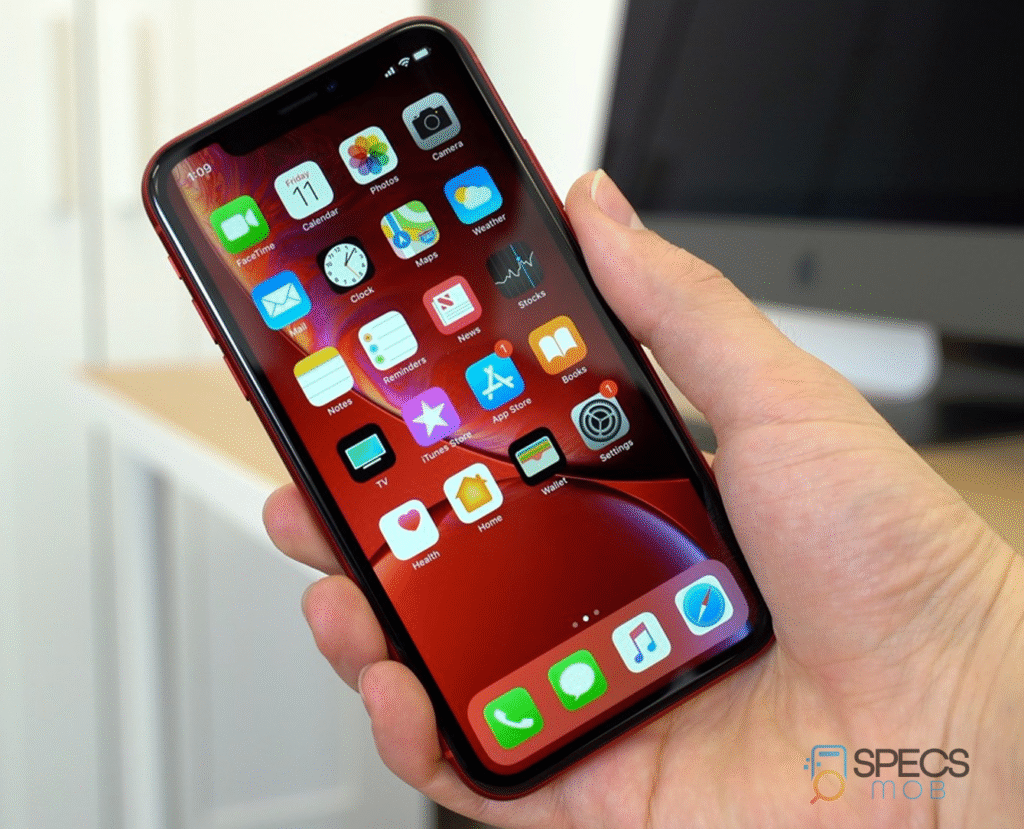
The Liquid Retina IPS LCD produces rich and true-to-life images. The Full HD display with 625 nits of brightness provides outstanding outdoor readability, and the wide color gamut (P3) provides cinema-like quality to videos.
When paired with stereo speakers, the XR turns into a mini-entertainment hub. Apple’s balanced soundstage ensures clarity and loudness without distortion. Whether you’re streaming Netflix or scrolling through TikTok, the iPhone XR display and sound quality provide a truly immersive experience.
9: iPhone XR Software and User Experience
The iPhone XR experience is where Apple’s long-term plan really comes into its own. First released with iOS 12, it is now updated to iOS 18.7, demonstrating Apple’s unparalleled dedication to longevity.
The A12 Bionic chip still provides responsive performance, and Face ID is one of the fastest and most secure biometrics systems on the market.
- iOS 18.7 Support: Includes improved privacy, widget customization, and advanced Siri integration.
- Face ID: Secure, accurate, and fast facial recognition.
- Augmented Reality (ARKit): Smooth AR gaming and measurement applications.
- Animoji & Memoji: Personalized emotions with the TrueDepth camera.
- Apple Ecosystem Integration: Seamless integration with Apple Watch, iPad, and Mac.
- Battery Health Management: Prevents degradation in performance over time.
The XR manages multitasking, animations, and app switching without any lag. Even after repeated OS updates, the performance stability is not lost, something most Android devices cannot do yet.
Pros:
- Solid longevity because of Apple’s care and optimization
- A12 Bionic chip that provides seamless daily performance
- Great color choices and premium build
- iOS features still current
- Safe camera with Smart HDR and OIS
- Decent battery life at the time
- Water and dust resistant (IP67)
Cons:
- Single rear camera (no telephoto or ultra-wide)
- Display is LCD instead of OLED (less contrast)
- No 5G capability
- 3 GB RAM can feel constraining for future, more resource-intensive apps
- Charging is not really fast and requires a higher wattage charger
10: Frequently Asked Questions About iPhone XR Specifications(FAQs)
1. Is iPhone XR still worth buying in 2025?
Yes. The iPhone XR still feels like a mid-range flagship due to the A12 Bionic chip and support of iOS 18. Its camera performance, battery life, and general reliability make it an excellent value-for-money iPhone even in 2025.
2. How long will the iPhone XR receive updates?
Apple generally supports phones for 6–7 years. Because the XR debuted with iOS 12, it should be supported through iOS 19 or 20, perhaps into 2026–2027.
3. Does iPhone XR have 5G?
No. iPhone XR specifications only supports 4G LTE, not 5G. But its 4G speeds are great for streaming, gaming, and general use.
4. How is the iPhone XR camera?
The iPhone XR camera is great even now. It takes vibrant, full of detail photos with good color balance and excellent portrait effects with the help of software depth mapping.
5. How long does the iPhone XR battery last?
The XR lasts as long as 78 hours of endurance, or as much as 14–16 hours of use, based on your lifestyle. It recharges to 50% in 30 minutes using a PD charger.
6. Which of the iPhone XR devices supports dual SIMs?
The A2107 and A2108 models (China and Hong Kong) have dual Nano-SIM slots, while others utilize Nano + eSIM combinations.
7. What are the colors of the Apple iPhone XR?
The iPhone XR is available in six colors: Black, White, Red, Yellow, Coral, and Blue, one of the most colorful lineup ever offered by Apple.
Introduction
The initial commercial success of the second effort to develop a more affordable iPhone was the iPhone XR. We thought that the producer would not pursue this idea again following the lackluster reception of the iPhone 5c in 2013. Given that the iPhone XR was the top-selling version of the three last year, we are happy to present the iPhone 11 this year.
The iPhone XR, which featured an LCD display, a single rear camera, and an impressively long battery life, was essentially a more affordable and less flashy alternative to the XS series. However, within Apple’s realm, the words “affordable” and “less expensive” carry distinct interpretations.
In reality, the iPhone 11 is now more affordable this year than the XR was at its launch; it is priced at $700 compared to $750. The positive aspect is that the base model iPhone includes several appealing enhancements and nothing has been omitted.
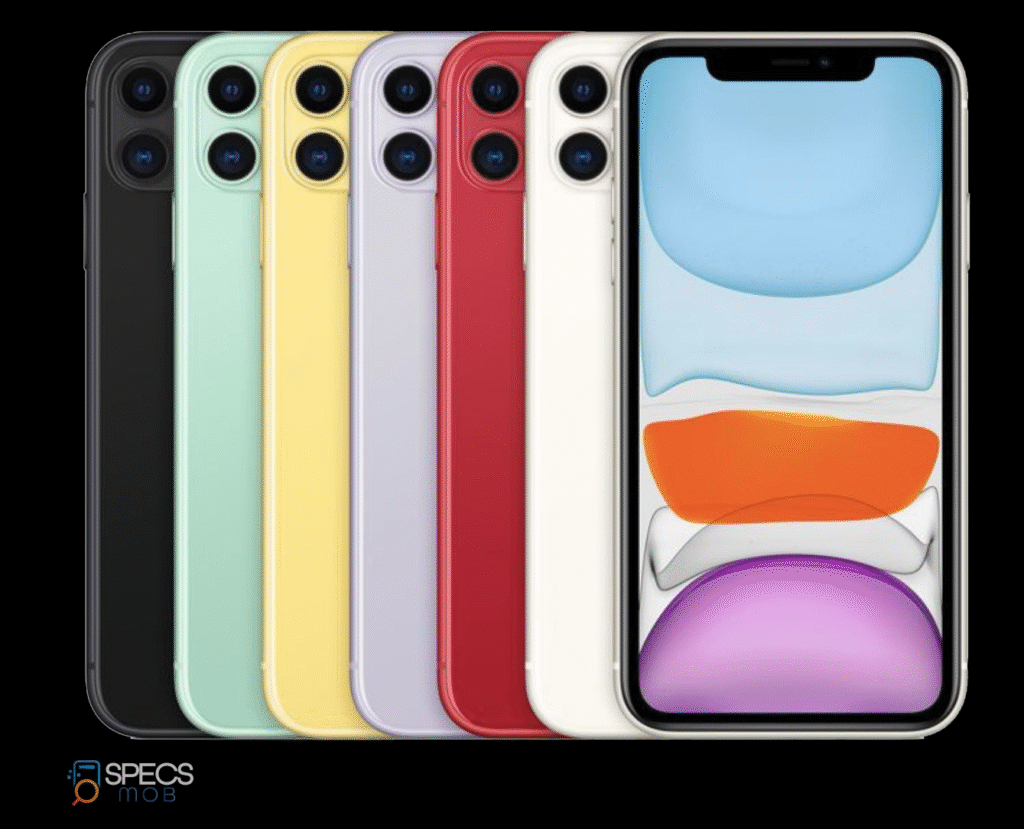
Consequently, the form factor and display of the iPhone 11 are identical to those of the XR. It utilizes the same 6. 1″ IPS LCD display with 326 ppi and features a Face ID technology notch at the top. The display’s brightness, contrast, haptic touch, and other characteristics remain unchanged.
The new Apple A13 Bionic technology, which powers the flagship iPhone 11 Pro models, is incorporated in the iPhone 11. Moreover, it includes a secondary camera, the new 12MP super wide-angle camera that was also part of the Pro models. Furthermore, you have the ability to capture 4K video with all of your cameras simultaneously and employ capabilities such as Crop Out of Frame.
The iPhone 11 now features the updated 12MP selfie camera. This 12MP camera comes with a 23mm wide lens and offers the capability to record 4K at 60 frames per second or 4K at 30 frames per second with an enhanced dynamic range. The front-facing camera includes cinematic stabilization across all modes.
The iPhone 11 is now equipped with a 3,110mAh battery rather than the 2,942mAh battery found in the XR, a result of Apple’s skill in accommodating a larger battery within the same chassis as the previous year.
Although the iPhone 11 supports 18W charging, it lacks a fast charger, unlike the Pro models.
The iPhone 11 is distinct from the XR because it features a new camera and chip, along with numerous new and exciting software functionalities. Furthermore, Apple is now offering the 11 in various colors, including purple and green (we have the green model here for review).
Specifications of the Apple iPhone 11
- Body: IP68 rated for water and dust resistance, aluminum chassis, oleophobic-coated Gorilla Glass front, glossy Gorilla Glass back. Color options consist of black, green, yellow, purple, white, and red.
- Screen: 6. 1″ IPS LCD display with broad color range, touch sensitivity at 120 Hz, 326 ppi, 625 nits brightness, and 828 x 1792 px resolution. A six-channel ambient light sensor is implemented to adjust the tone.
- Operating system: iOS 13
- Chipset: Hexa-core (2×2. 66 GHz Lightning + 4×1. 8 GHz Thunder) Apple A13 Bionic chip (7nm+) Three-generation Apple CPU, four-core Apple GPU, and eight-core Apple NPU
- Memory: 64/128/256GB of internal storage; 4GB of RAM
- Dual 12MP camera: 13mm ultra wide-angle, F/2. 4, 120-degree field of view; quad-LED flash with slow sync; 26mm main wide-angle, F/1. 8, OIS, Dual Pixel AF
- Video recording: OIS + EIS, 1080p@30/60/120/240 fps, 2160p@60/30 fps, featuring enhanced dynamic range and spatial audio.
- This selfie comprises two cameras: a 23mm 12MP F/2. 2 front-facing camera equipped with HDR mode and a 3D TOF camera; it captures videos at 2160p@60/30 fps and 1080p@60/120 fps with improved dynamic range, spatial audio, EIS, and depth detection for portrait mode.
- Wi-Fi a/b/g/n/ac/ax; Bluetooth 5. 0; dual SIM, 4G LTE (1 Gbps); GPS with A-GPS, GLONASS, GALILEO, and QZSS; NFC; Apple U1 chip ultrawideband.
- Battery: Qi wireless charging, 18W fast charging, 3,110 mAh.
- Miscellaneous: Taptic Engine, dual speakers, and a specialized TrueDepth camera for Face ID.
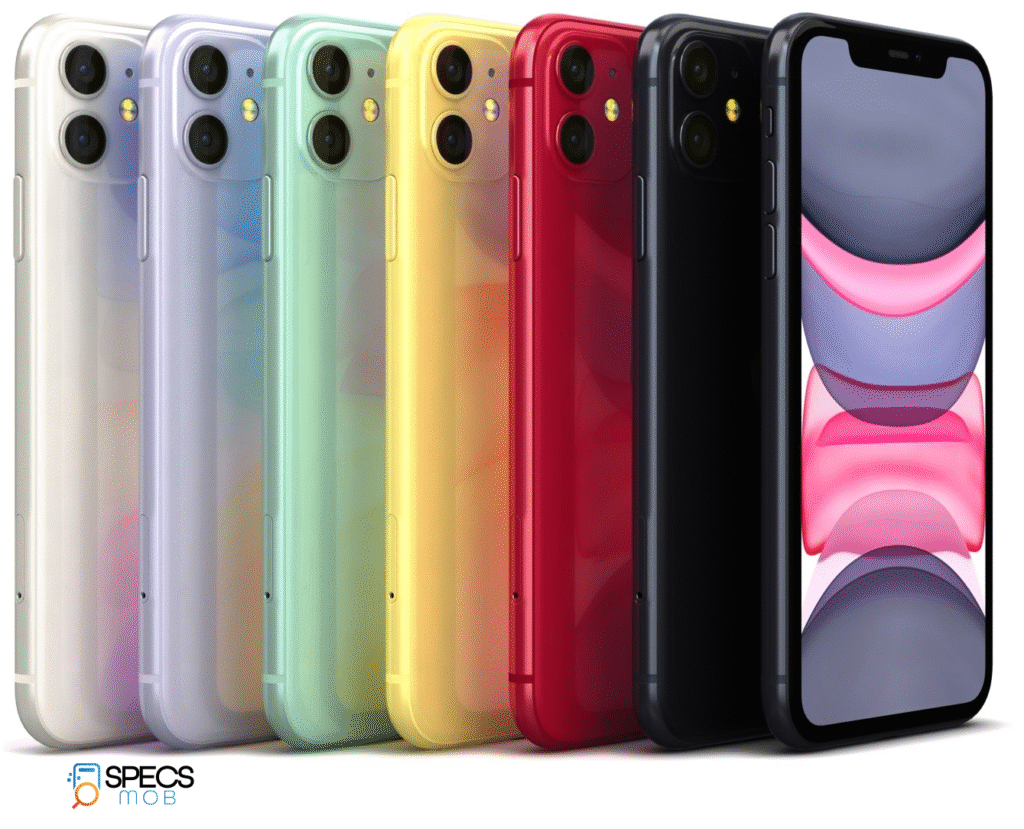
Enhanced water protection is yet another characteristic of the iPhone 11, which might have sturdier glass on both the front and back. The latter, we conjecture, will ultimately be verified through time and instances of dropping.
In any case, let’s commence this assessment now that we are ready to unbox the iPhone 11.
The white packaging of the iPhone 11 is somewhat larger than the device itself. The iPhone 11 is accompanied by a regular Lightning cable, a set of EarPods that connect to a Lightning port, and the outdated 5W charger.
Apple no longer includes a 3. 5mm adapter with the iPhones.
The new 18W Apple charger included with the Pro models is not included with the iPhone 11, despite its compatibility with 18W fast charging through USB Power Delivery. Nevertheless, since the iPhone 11 is $50 cheaper than the XR, you might be able to use the saved amount to buy the 3. 5mm converter ($9), the required USB-C-to-Lightning 1m cable ($19), and the previously mentioned 18W charger ($29).
Design
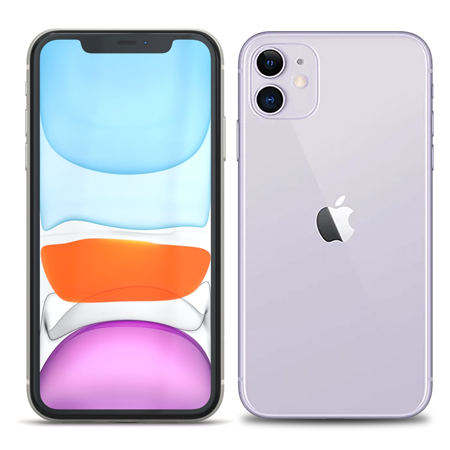
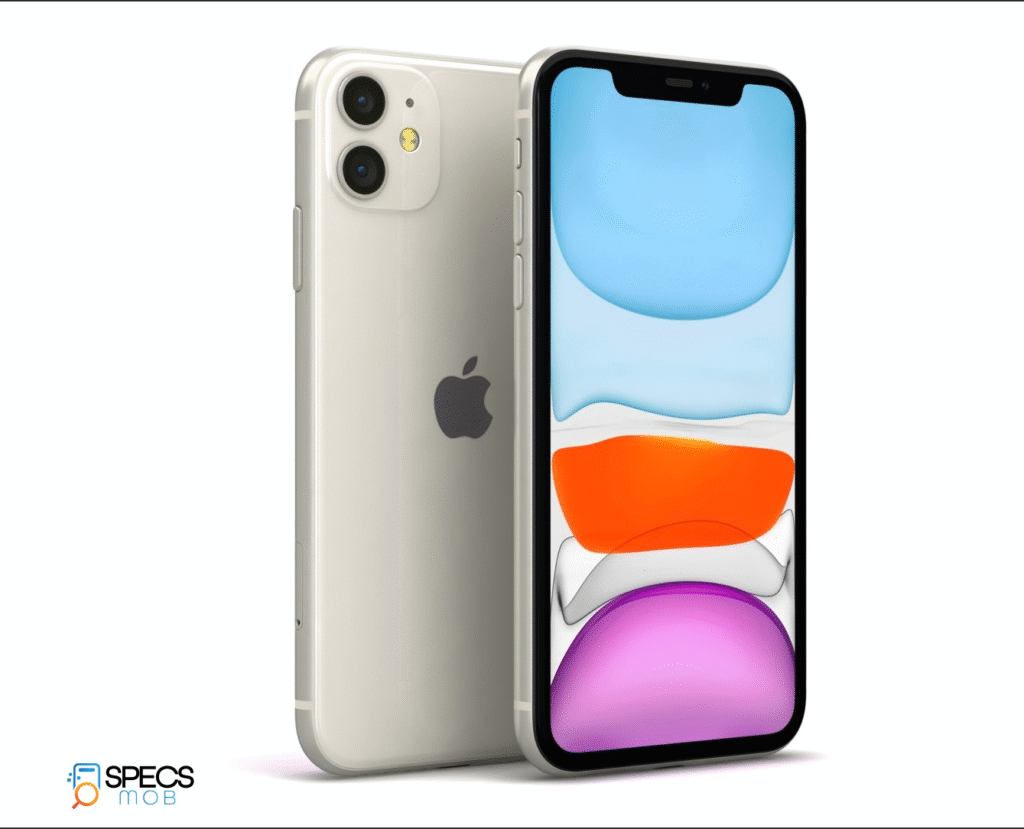
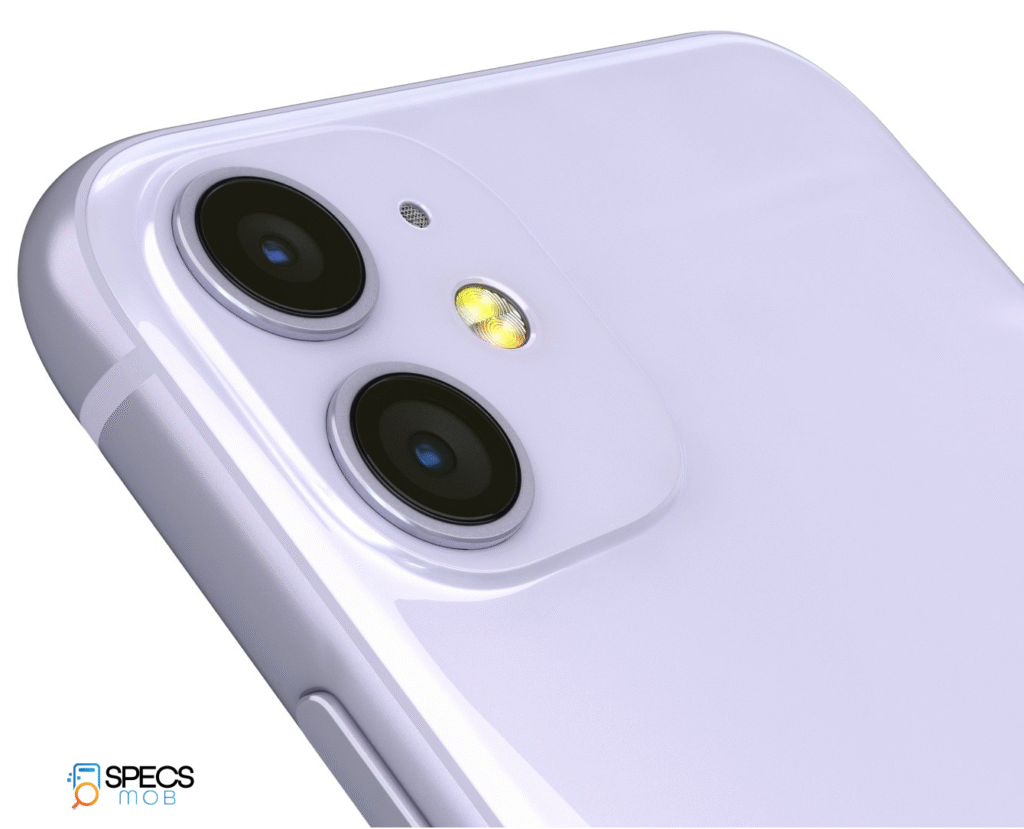
With a 6. 1-inch LCD display, a prominent Face ID notch, and considerable bezels reminiscent of the iPhone XR, the iPhone 11 upholds the classic iPhone aesthetic. It features a flat glass front with 2. 5D edges and Corning’s patented “toughest glass” protection. The brushed metal frame gives it a lightweight and smudge-resistant build. On the rear, a matte-textured square camera module houses two 12MP cameras—a primary wide lens equipped with OIS and an ultrawide camera that lacks a zoom lens—along with a glossy glass design that has the Apple logo placed centrally on the back. The device comes in new colors, including a vivid purple, and the camera bump is less pronounced than expected.
With a broader angle lens for improved Face ID functionality and digital stabilization, the front 12MP selfie camera is now capable of recording 4K video at 60 frames per second. Haptic Touch, which depends on prolonged presses accompanied by taptic feedback, substitutes 3D Touch in the iPhone 11. Its weight (194g) and dimensions (150. 9 x 75. 7 x 8. 3 mm) are the same as those of the XR, but it has been enhanced to IP68 water resistance, allowing for submersion in 2 meters of water for 30 minutes.
Similar to the XR’s, the display does not have the contrast and brightness of OLED but is still durable and cleanable thanks to its oleophobic coating. Stereo speakers, a quiet mode, and a Lightning port are included among the phone’s standard features. The mid-sized form factor makes it easy to use with one hand, and the brushed frame improves grip even though it is somewhat slippery.
Taking everything into account, the iPhone 11 delivers a familiar iPhone experience along with slight upgrades such as improved cameras, higher water resistance, and a solid design, making it a viable option for those seeking something more affordable than the Pro models.
Display
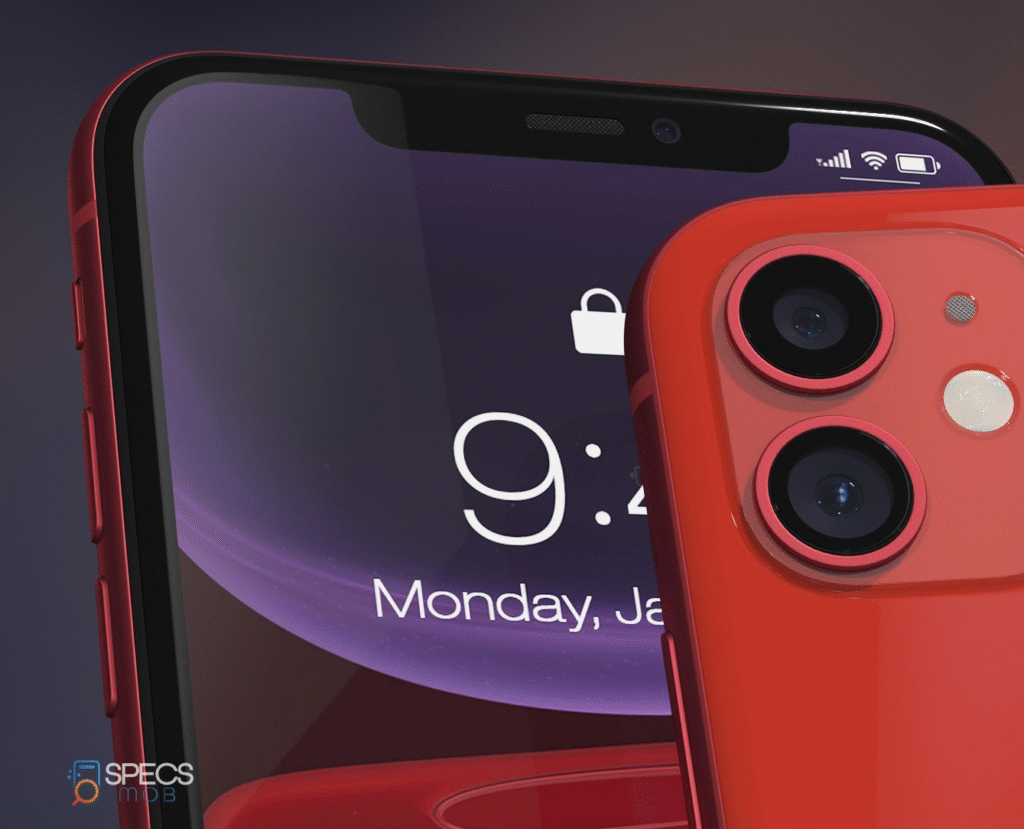
Similar to the XR, the iPhone 11 features a 6. 1-inch Liquid Retina IPS LCD display with a large notch, 326 pixels per inch, and a resolution of 828 x 1792. While its LCD panel limits it from supporting HDR10 or Dolby Vision, it boasts a wide color gamut thanks to DCI-P3 and excellent color accuracy (average DeltaE 1. 1). The display can reach a maximum brightness of 644 nits with a contrast ratio of 1500:1, and True Tone adjusts the white balance based on the ambient light. Although the refresh rate remains at 60 Hz, the touch input has a polling rate of 120 Hz to minimize latency. Even in low light conditions, the display delivers sharp images, precise colors, and consistent performance, even though it has a lower resolution than OLED devices.
Battery Life
Slightly larger than the XR’s, the iPhone 11’s 3,110 mAh battery supports both wireless and 18W fast charging via USB Power Delivery. It includes a 5W charger, however, which only replenishes 18% of the battery in 30 minutes and may take as long as 4 hours to charge fully. An 18W fast charger enables a charge up to 55% in just 30 minutes. With an impressive endurance rating of 94 hours, the iPhone 11 surpassed the XR and 11 Pro in evaluations, providing 18 hours of 3G call time, 15. 5 hours for web surfing, and 18. 5 hours for video playback. Its efficient performance and standby time make it a strong contender for prolonged battery life.
Performance
The iPhone 11 is powered by the Apple A13 Bionic chip, which contains 8. 5 billion transistors and is built on a 7nm+ technology. It features an 8-core Neural Engine for advanced tasks such as Deep Fusion and Night Mode, a 4-core GPU (20% faster, 40% more efficient), and a hexa-core CPU (2×2. 65 GHz Lightning + 4×1. 8 GHz Thunder cores). Benchmarks confirm the A13’s superiority with 15% quicker single-core and 20% quicker multi-core performance compared to the A12. In offscreen evaluations such as Manhattan and Car Chase, the GPU also delivers top performance. The A13 surpasses Android competitors and establishes a high benchmark until the A14 is released due to its 4GB of RAM, improved thermal management utilizing graphene layers, and consistent performance with minimal throttling. It remains the fastest chip in smartphones.
Summary
Building on the achievements of the iPhone XR, the iPhone 11 provides notable enhancements at a more affordable price. Exceptional performance is guaranteed by its 6. 1-inch LCD screen, dual 12MP camera setup (wide and ultra-wide), and powerful A13 Bionic processor. While it supports 18W fast charging, the battery (3,110mAh) delivers improved longevity, and the front 12MP camera records 4K video. Nevertheless, it is supplied with a 5W charger. The design includes fresh color choices, an aluminum frame, and IP68 water resistance. Although it does not support OLED or HDR, the display exhibits remarkable color precision. Taking everything into account, the iPhone 11 is a compelling choice for shoppers on a limited budget since it combines traditional iPhone characteristics with enhanced cameras, performance, and battery stamina.
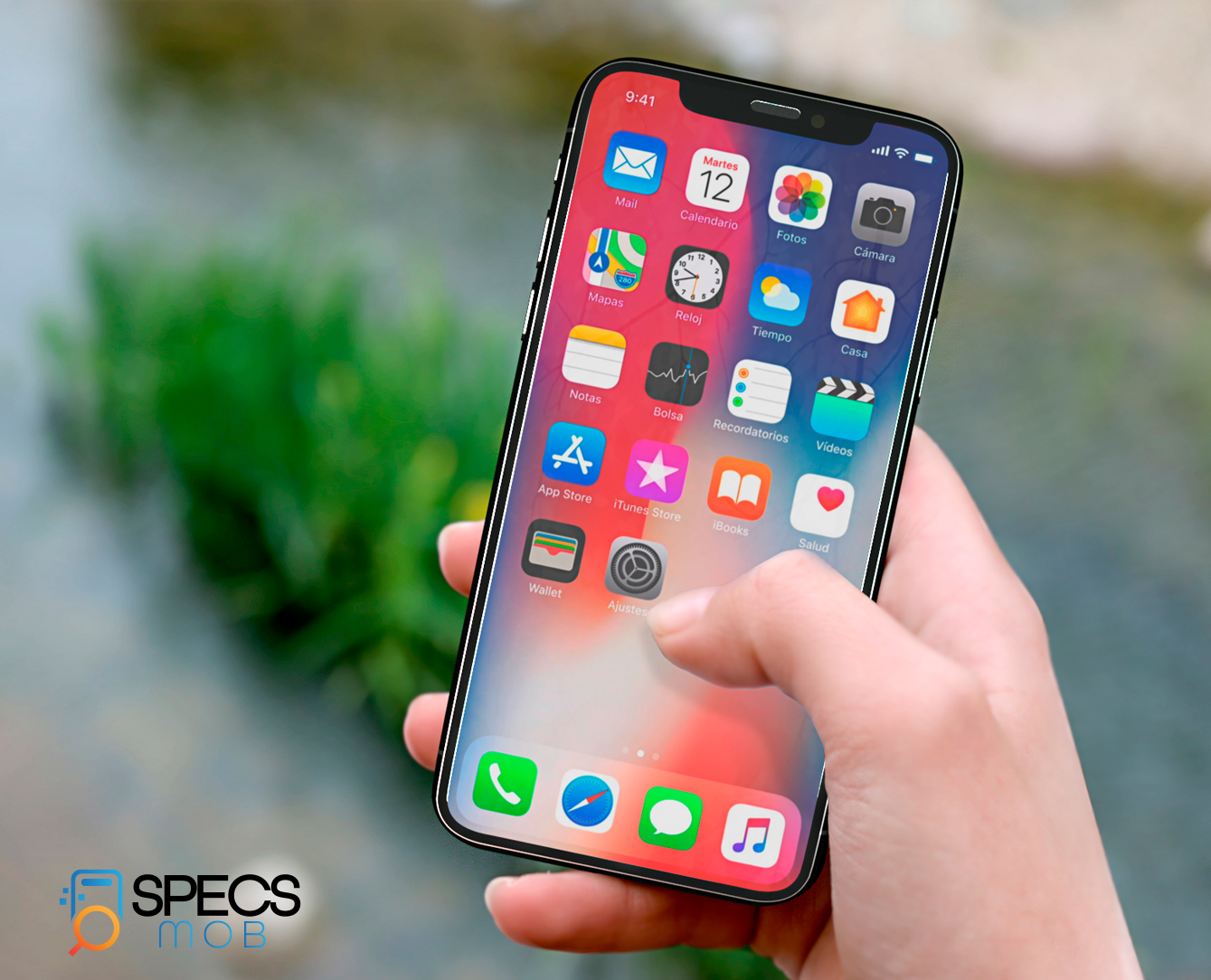
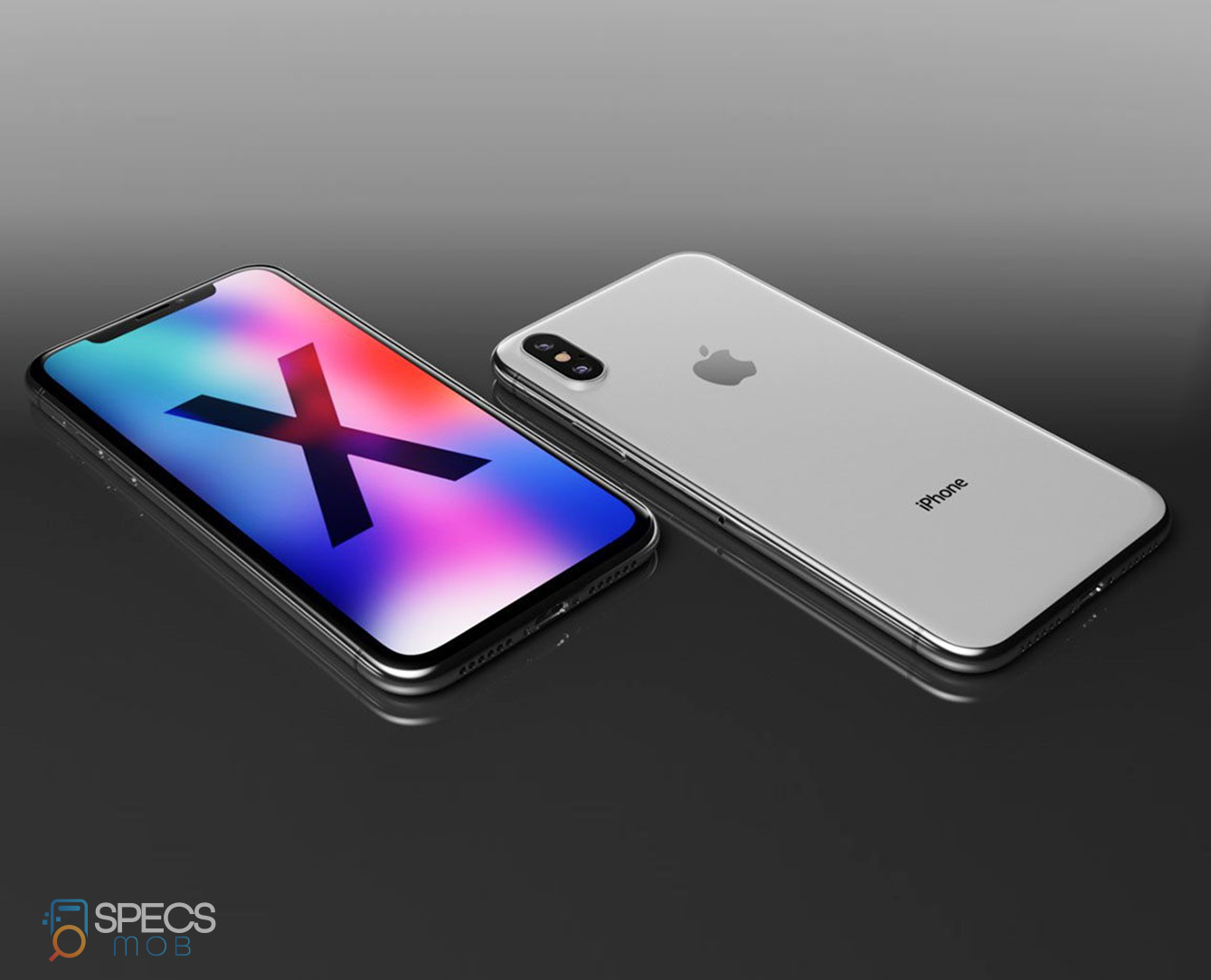
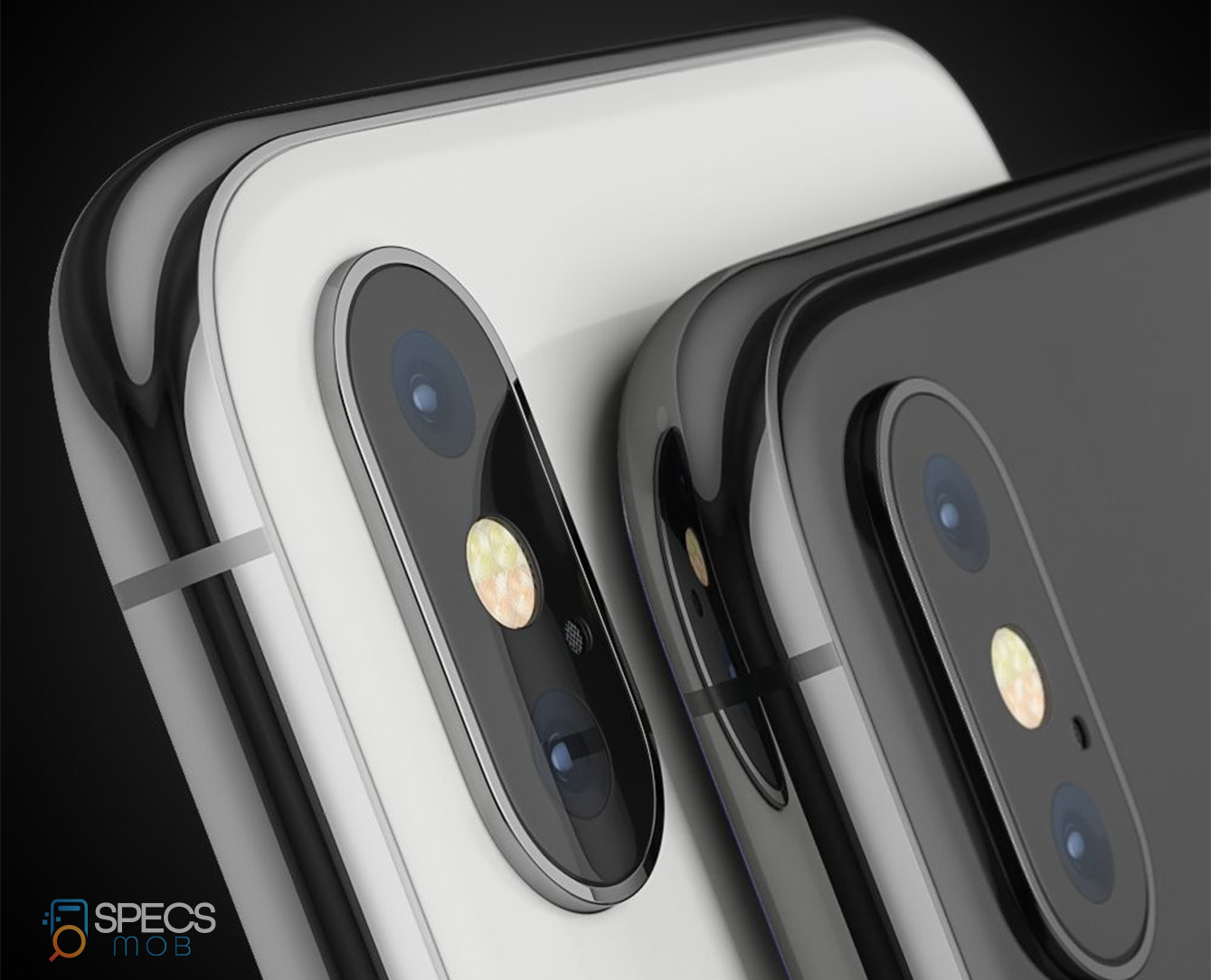

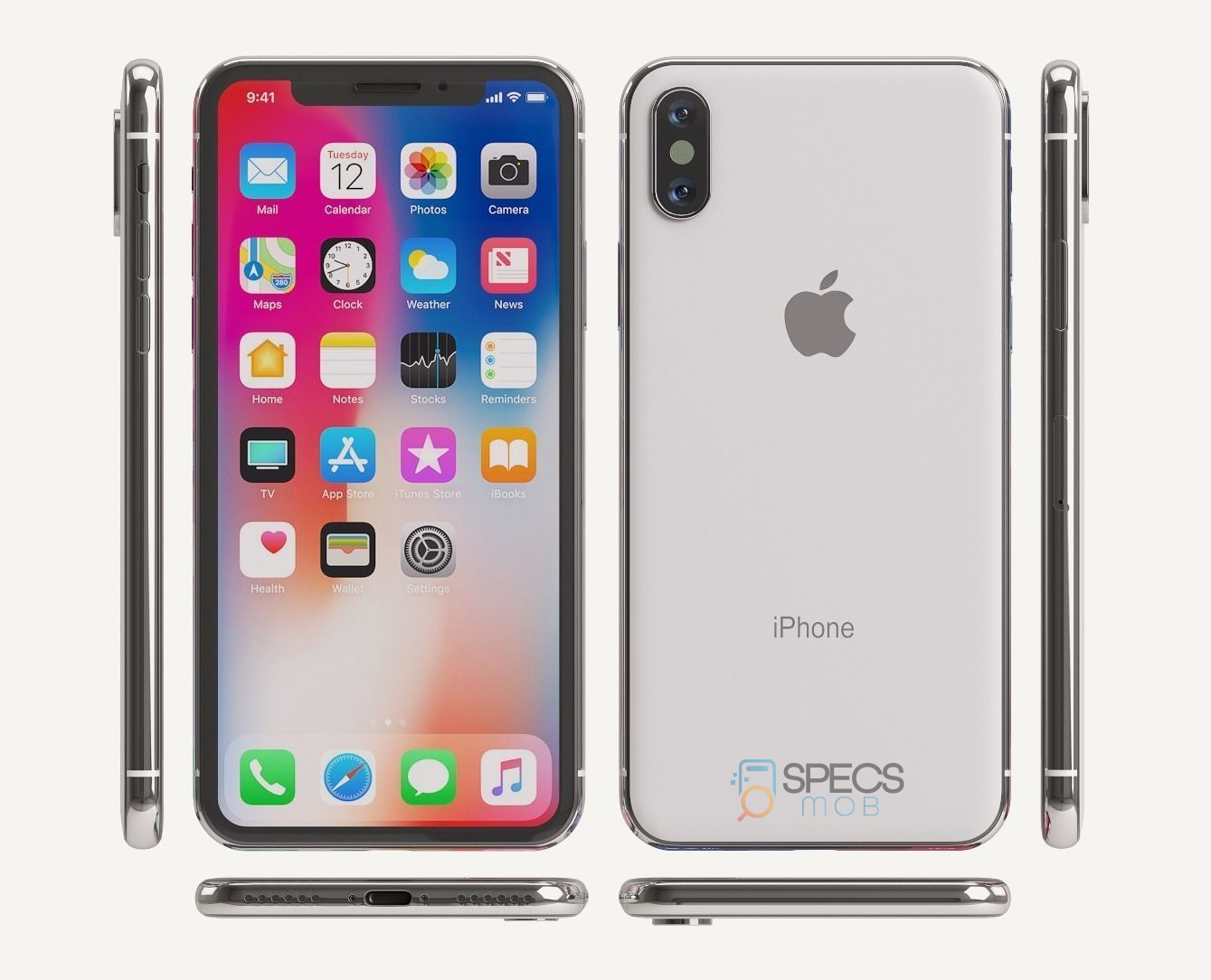
Reviews
There are no reviews yet.